A Journey South
One commonality shared between Judaism and much of East Asia: the lunar calendar. Sunday night I looked up at the nearly-full moon and the first thought that came to my mind was that the month of Av was scarcely more than two weeks away, with its major fast day on the Ninth in commemoration of the destruction of the Temple, and the subsequent seven-week countdown to the High Holiday season. (To any of my rabbi friends reading this: sorry for the inevitable blood pressure spike). In short: Yom Kippur is coming!
The Day of Atonement has been on my mind a great deal this week. As a memory scholar, there was one place in Japan that I wanted to go above all others, one place that my friend informed me she would not accompany me. That place, of course, was Hiroshima.
The Book of Lights, Chaim Potok’s novel that first introduced me to Korea, is really a book about the atom bomb: a friend of the main character is a fictional son of an atomic scientist who worked on the Manhattan Project, who is wracked with guilt over the destruction his father helped create. Together, the two friends travel to Japan while on leave in a journey of helpless repentance, visiting both Hiroshima and Kyoto, the city that was spared by the United States when Hiroshima was selected as the ultimate target. Several fictional stories abound about why, exactly, Kyoto was spared – Potok introduces an art historian who begs for the city’s temples and shrines; the film Oppenheimer reiterates the popular tale that Truman’s Secretary of War, Henry Stimson, had vacationed there on his honeymoon and saved the city for sentimental reasons. Neither is true: Stimson, though credited with talking Truman into removing Kyoto from the target list, married in 1893 and seems to have spent his honeymoon in New Brunswick, Canada. He had visited Kyoto at least twice for sightseeing and diplomatic purposes in the 1920s, but he seems primarily to have felt that destroying Kyoto would turn the Japanese permanently against the Americans, at a moment when attention was already turning towards the Soviet sphere of influence and the coming of the Cold War.
Kyoto, Japan’s ancient capital (my favorite fact I’ve learned here is that Kyo-to means “capital city,” while its replacement, To-kyo, just means “eastern capital”) is beloved as a tourist destination for its many cultural treasures. But it has not escaped the attention of scholars that Western fixation with Kyoto is somewhat circulatory: in part, we visit it because the Americans destroyed so many of Japan’s other cultural sites. I wanted to see Kyoto, of course. But I did not want to visit without first having seen Hiroshima.
These days, that is not such a difficult object to achieve: Hiroshima is a four-hour ride away from Tokyo on the Shinkansen, Japan’s beloved and astounding bullet train. I caught a 7am train there and reached the city well before noon. The mounting dread I felt every time the announcer listed “Hiroshima” among the train’s destinations somewhat deadened my enjoyment of the train itself. In some corner of my mind, the one that imagines and dreams up places well before I ever visit, Hiroshima was nothing but ash. I was not certain I was prepared to face the living city.
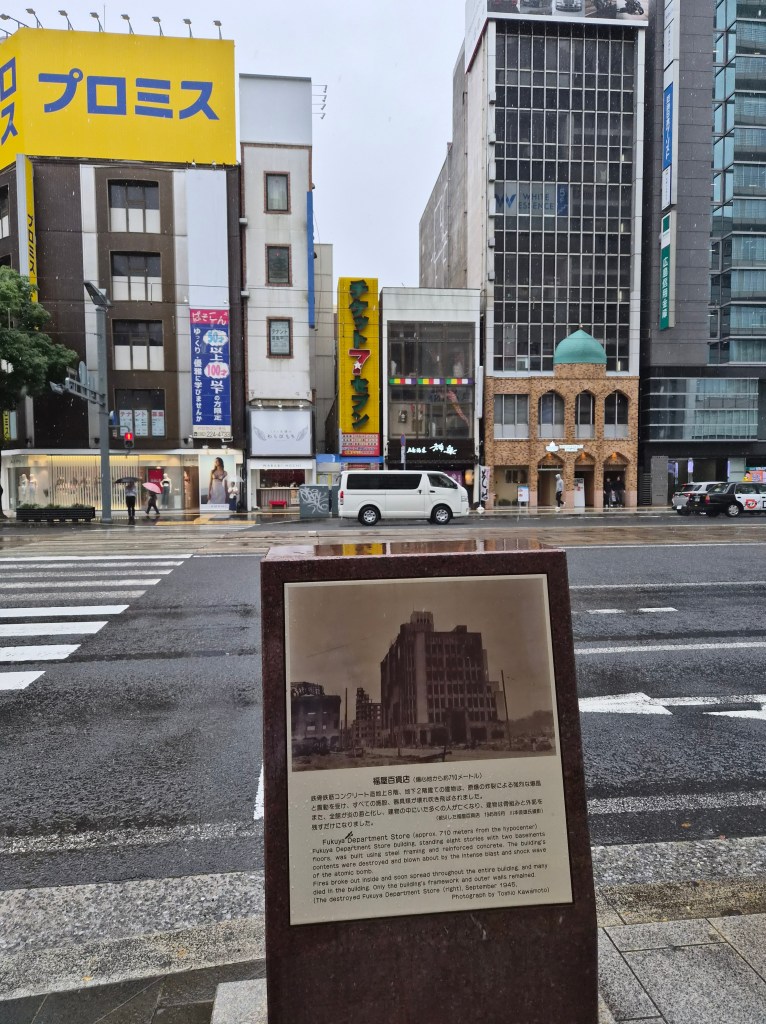
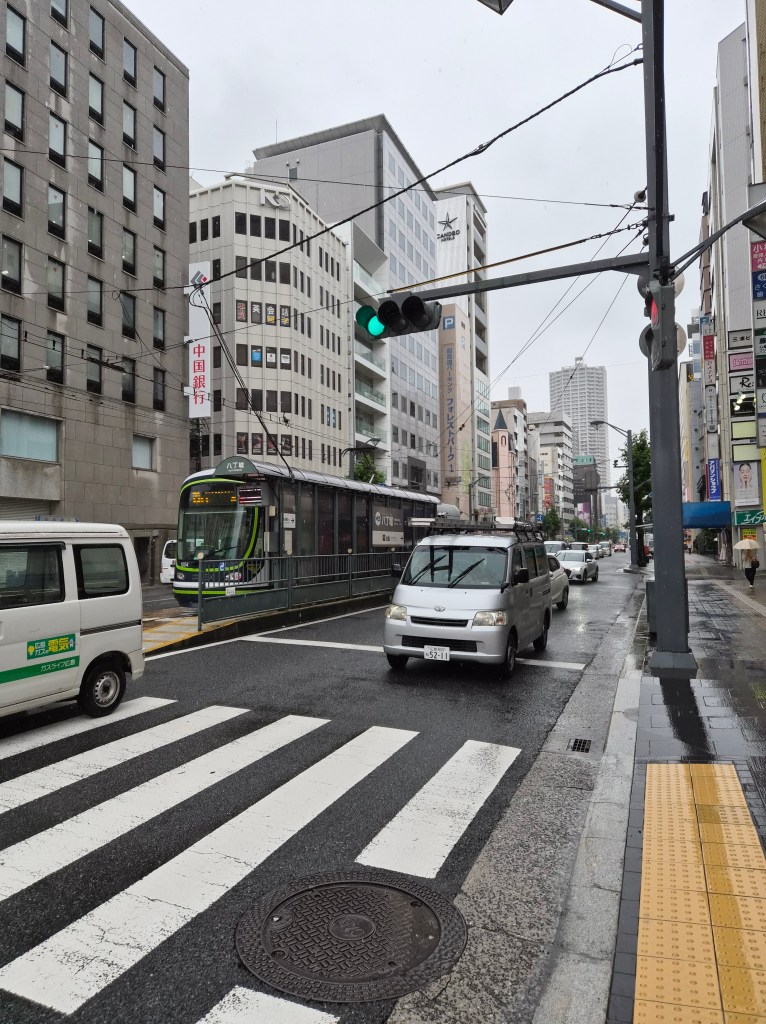
And indeed, upon arrival, Hiroshima looks like any other Japanese city, if perhaps a little more old-fashioned than bustling and cosmopolitan Tokyo: bright lights and omiyage (souvenir) shops and a mall in the train station, narrow and winding roads that lead you across various tourist attractions in the town. Here and there one finds a memorial, or a picture of what building used to be somewhere before the bomb blew it to pieces. There are many trams that will take you straight to Ground Zero and the Peace Memorial Park, but I walked the kilometer or so from the train station because I thought that first I should see the living people of the city: to remind myself that while life stopped for a moment on August 6, 1945, eventually it went on, as all things must.
The Peace Memorial Park
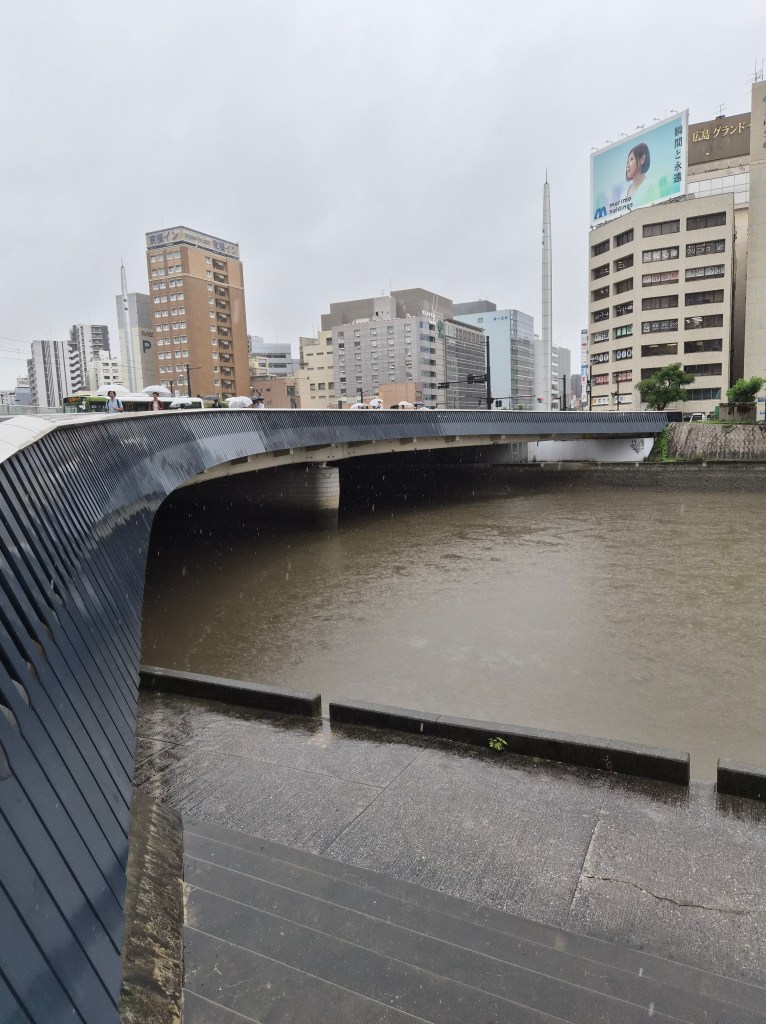
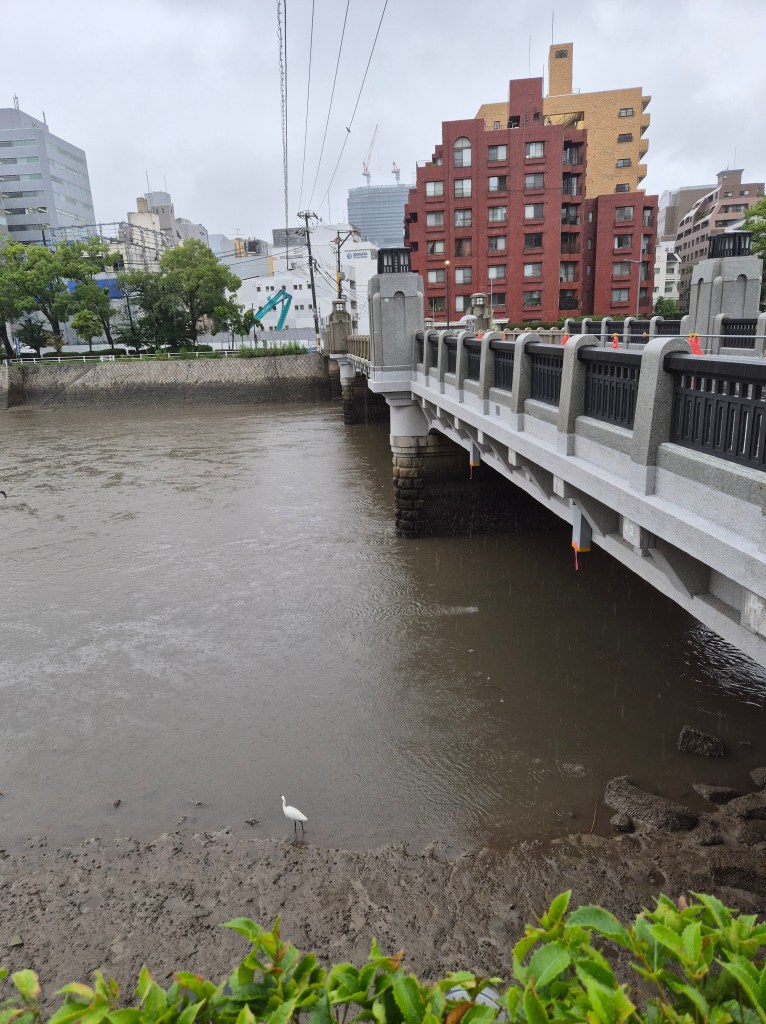
Hiroshima is a port city fractured by rivers. The Peace Memorial Park is at the point where the Motoyasu River splits in two, creating a long island before it eventually spills into Hiroshima Bay. The strange, T-shaped bridge that connects the island to the pieces of land on either side of it is thought to be the Enola Gay’s exact target. Today the island itself is the Peace Memorial Park, with the shattered remnants of the “A-Bomb Dome,” one of the only buildings not demolished in the years after the war, just across the Motoyasu’s eastern bank. It was chosen, one sign notes, not because it was exactly at Ground Zero (the bomb, which exploded 600 meters in the air, detonated slightly to the east), but because of the rivers, which create natural borders for the park. If one approaches from the south, they can see a straight line under the Peace Memorial Museum, through the A-Bomb Memorial Cenotaph, and clear to the Dome.
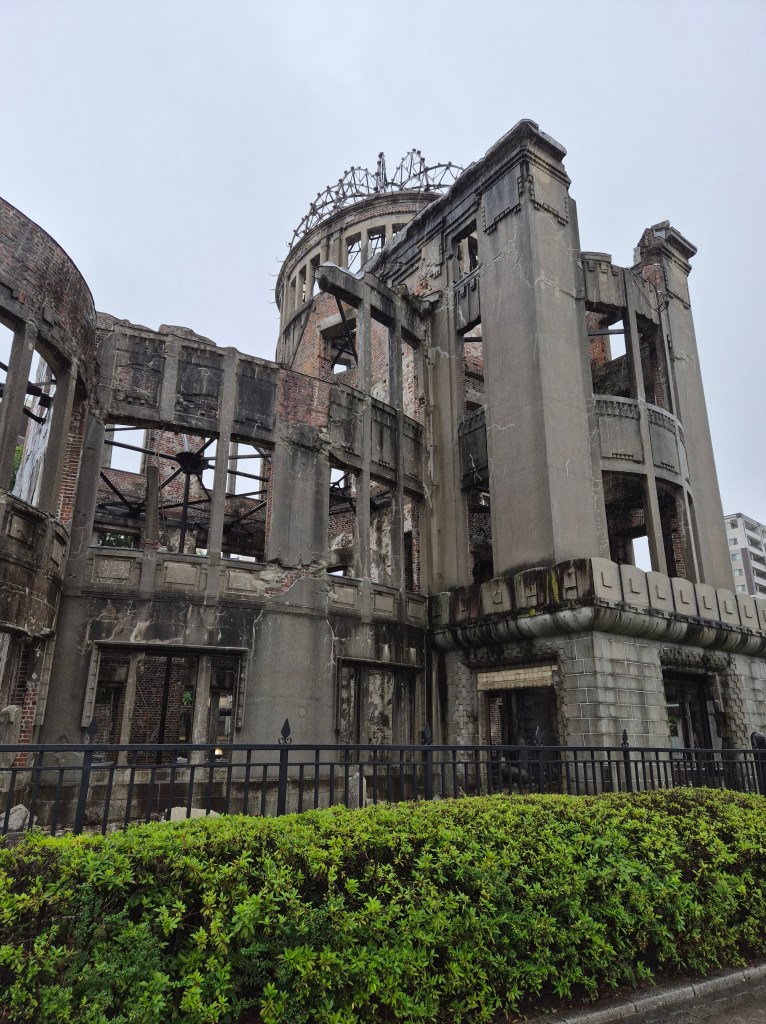
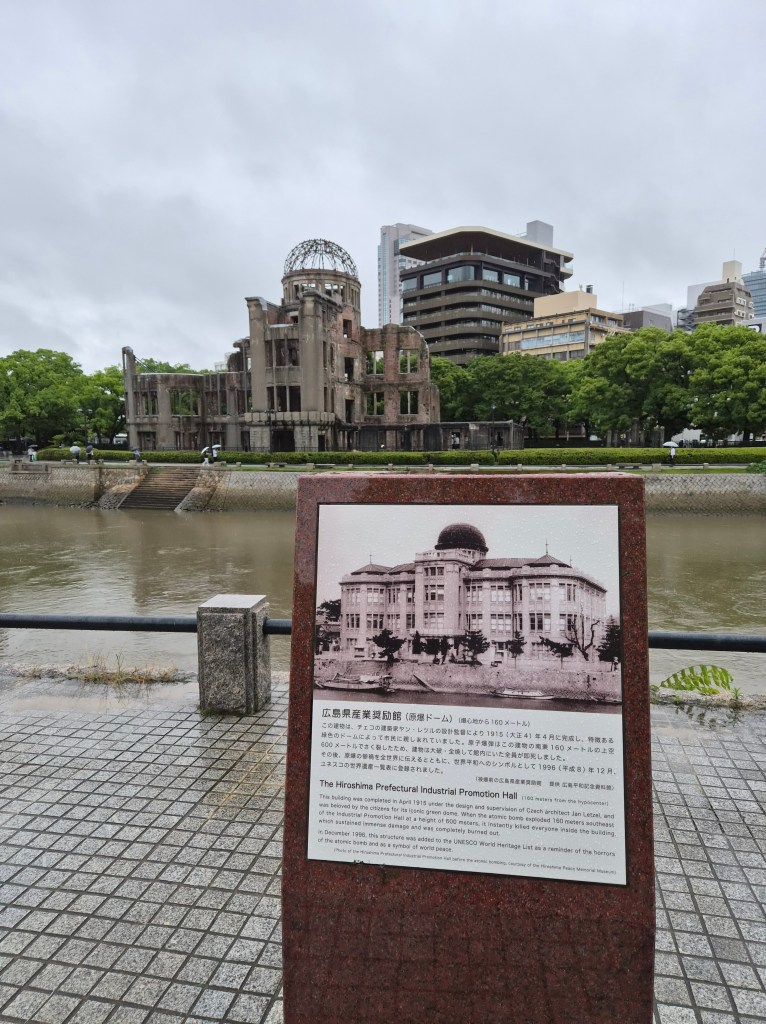
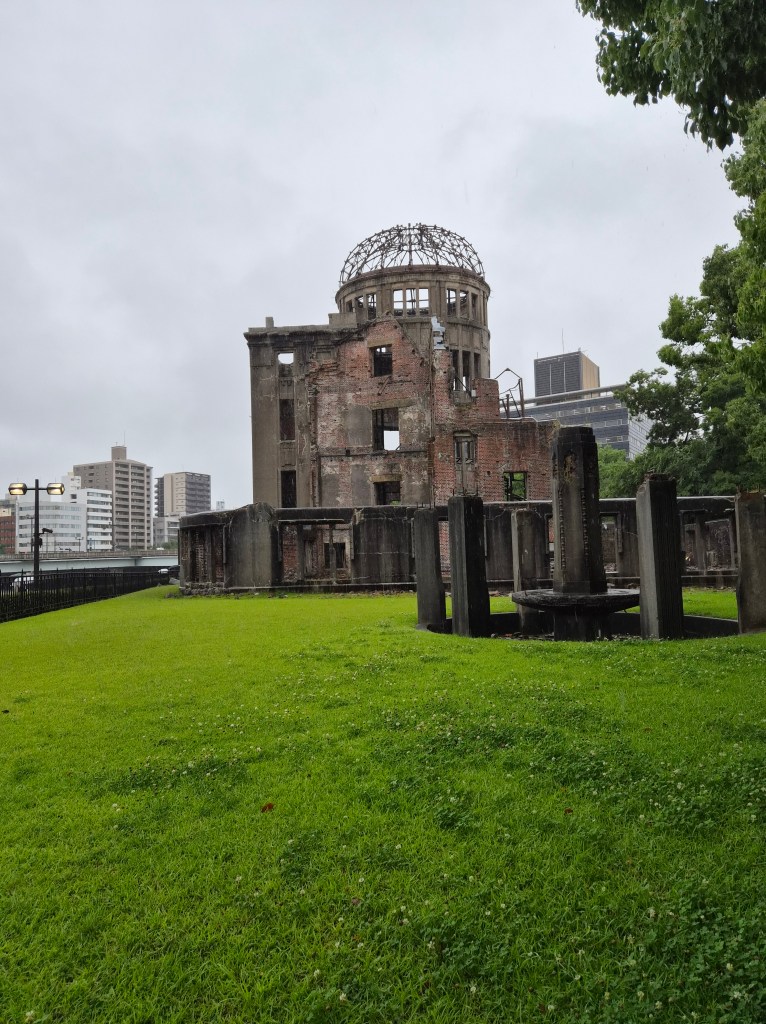
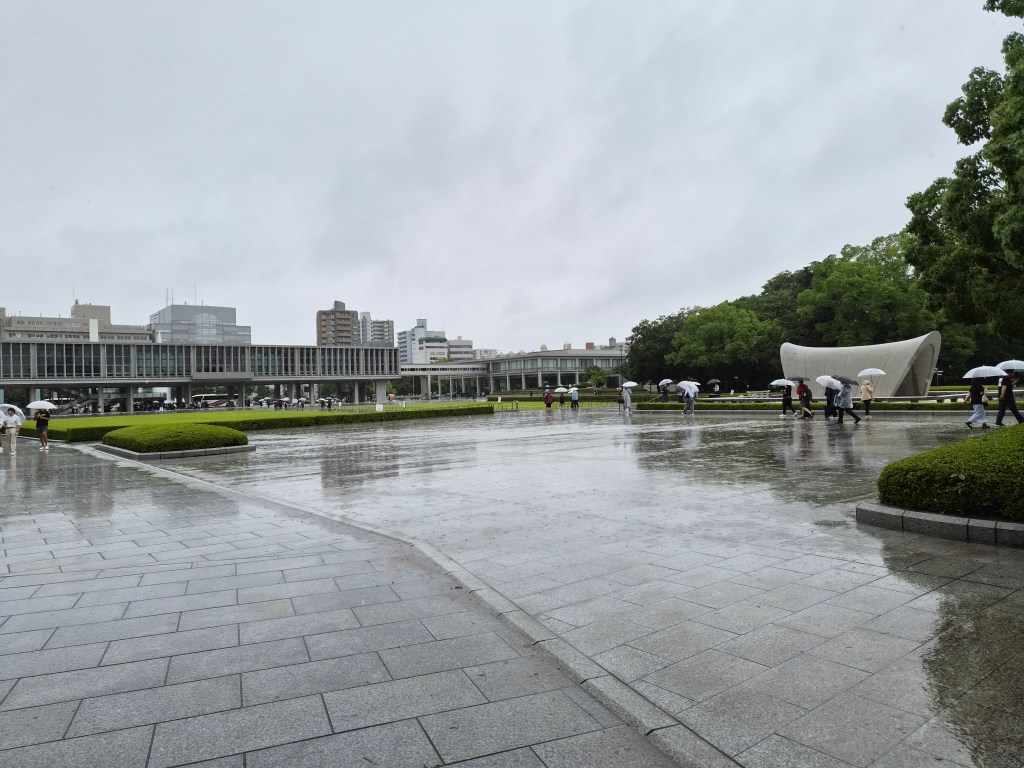
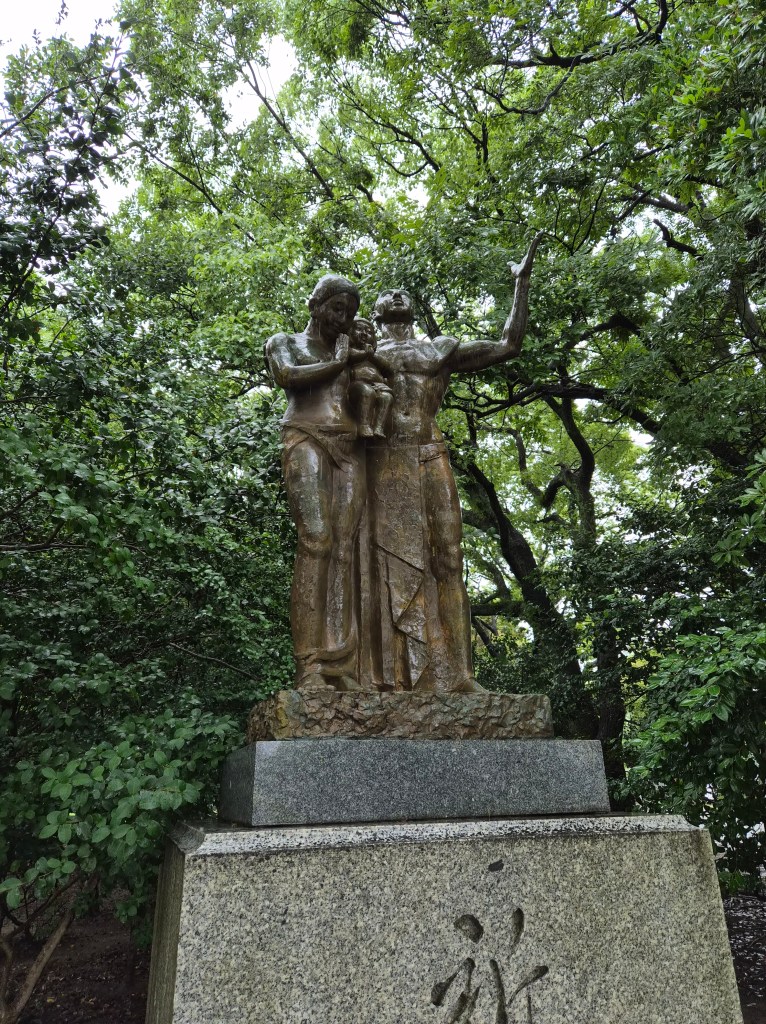
The park itself contains a variety of different memorials, as well as the museum at its southern edge. Some memorials are very specific in nature: the Children’s Peace Memorial (1958) was built specifically to honor the many children who died immediately from the impact of the bomb as well as from injuries and cancer in the following years, while the Korean Victims Memorial (1970) calls attention to the fact that ten percent of the bomb’s victims were Koreans, many of whom did not get the same recognition and support as survivors as their Japanese counterparts in the following years. Other memorials are more abstract or with a broader eye, including a bell that visitors can ring to call for peace, sculptures of parents protecting children and of families pleading wordlessly towards the heavens, and a clock tower that chimes for peace every morning at 8:15, the exact moment of the bombing. Less visible but perhaps more profound are the endless arrays of memorial trees. In the immediate aftermath of the bombing, scientists speculated that it would take 75 years before trees could once again grow in Hiroshima. Cities across Japan and across the world donated trees for the Peace Park, and its very verdancy is a testament to the city’s resilience and survival.
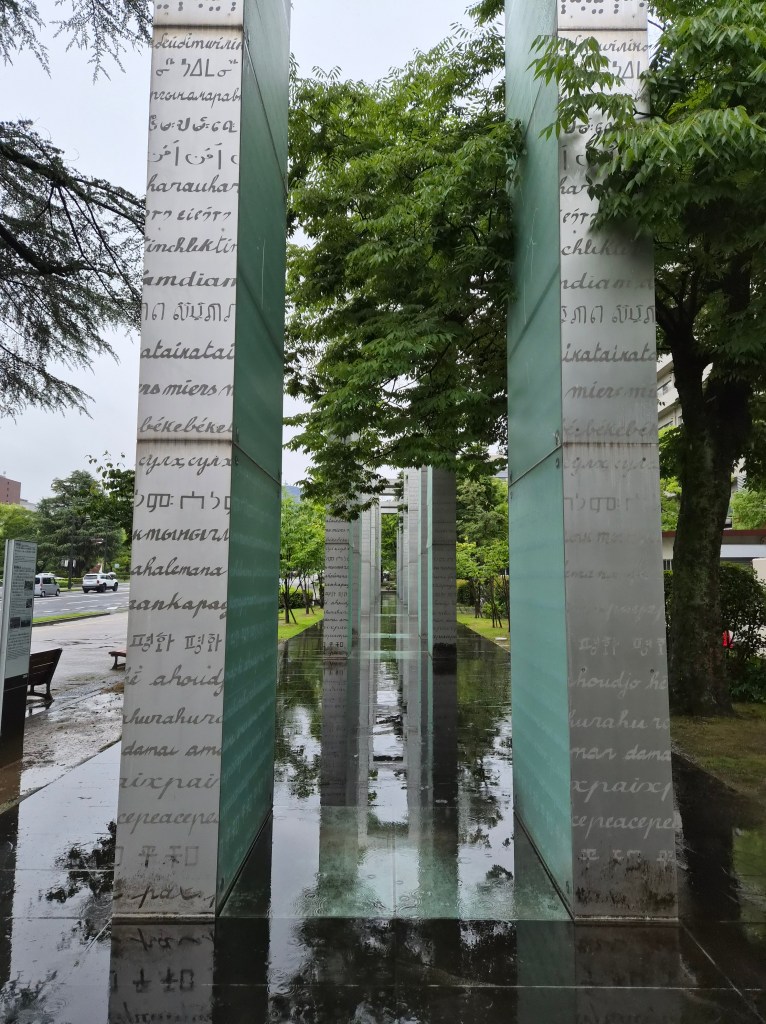
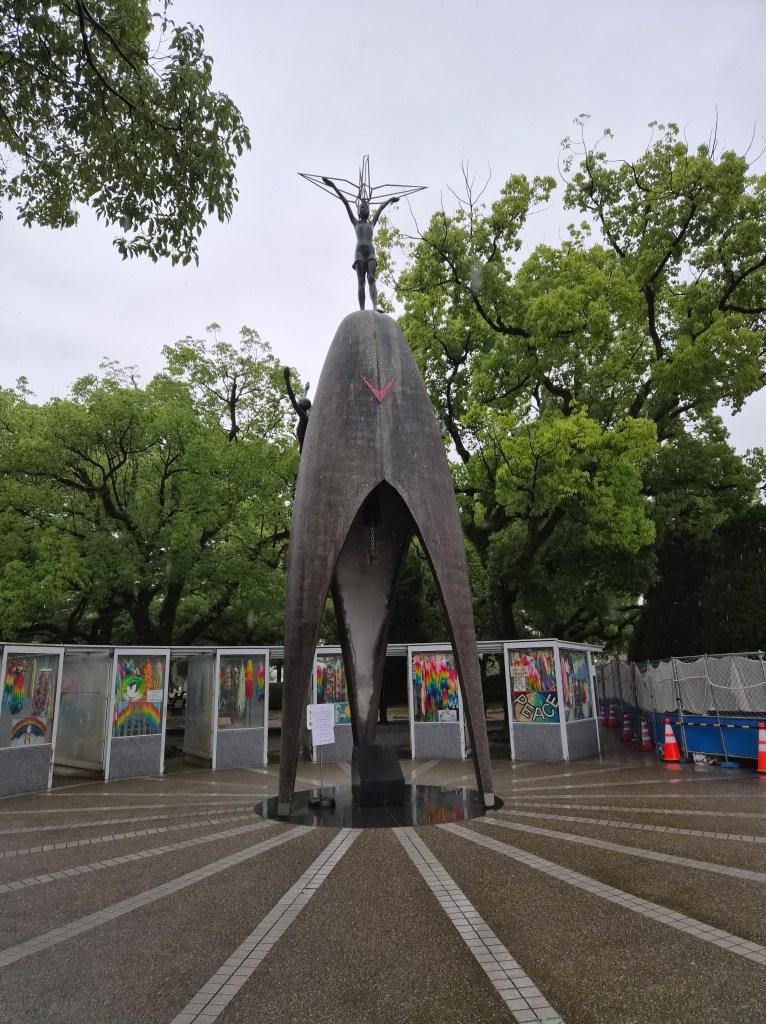
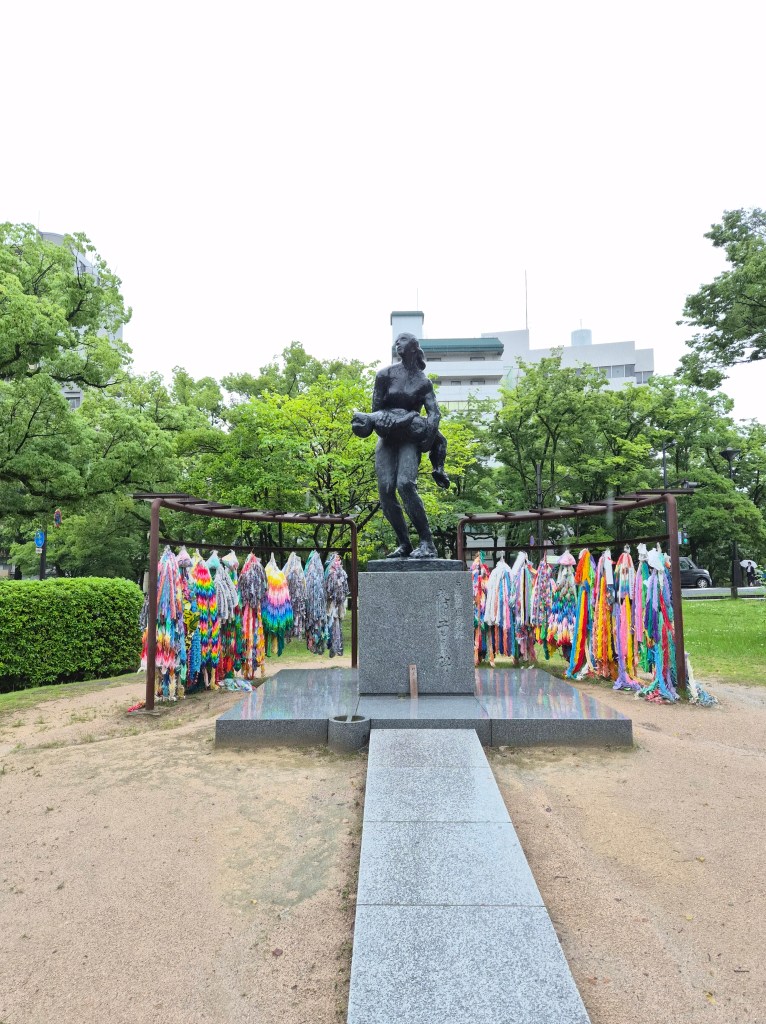
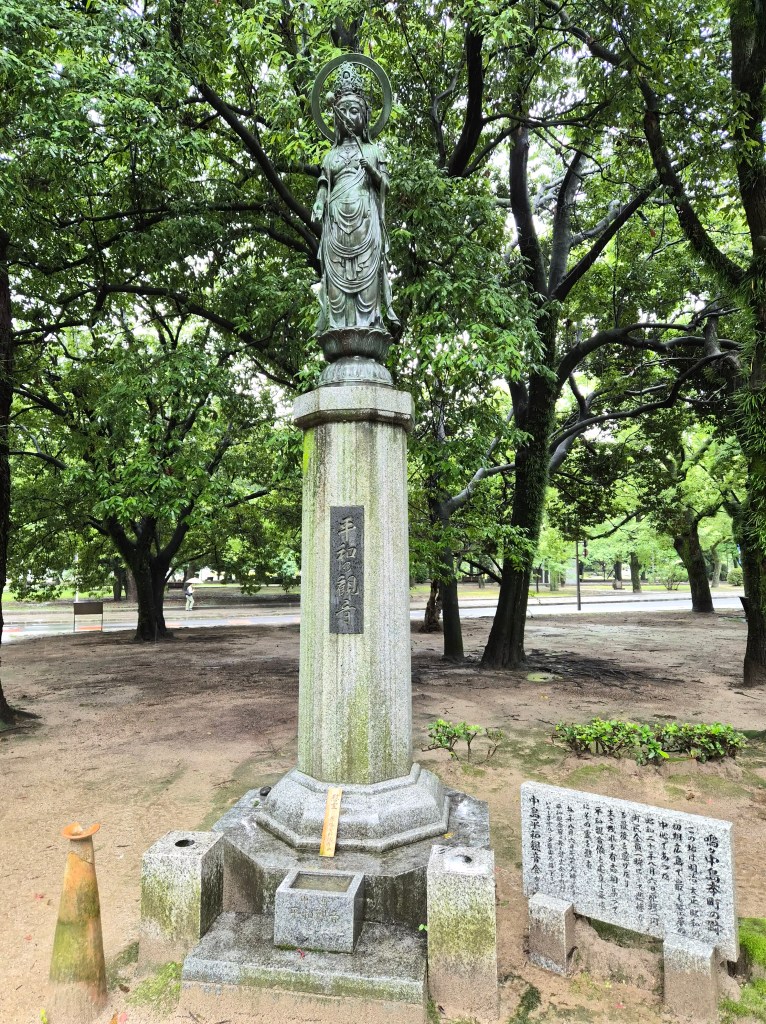
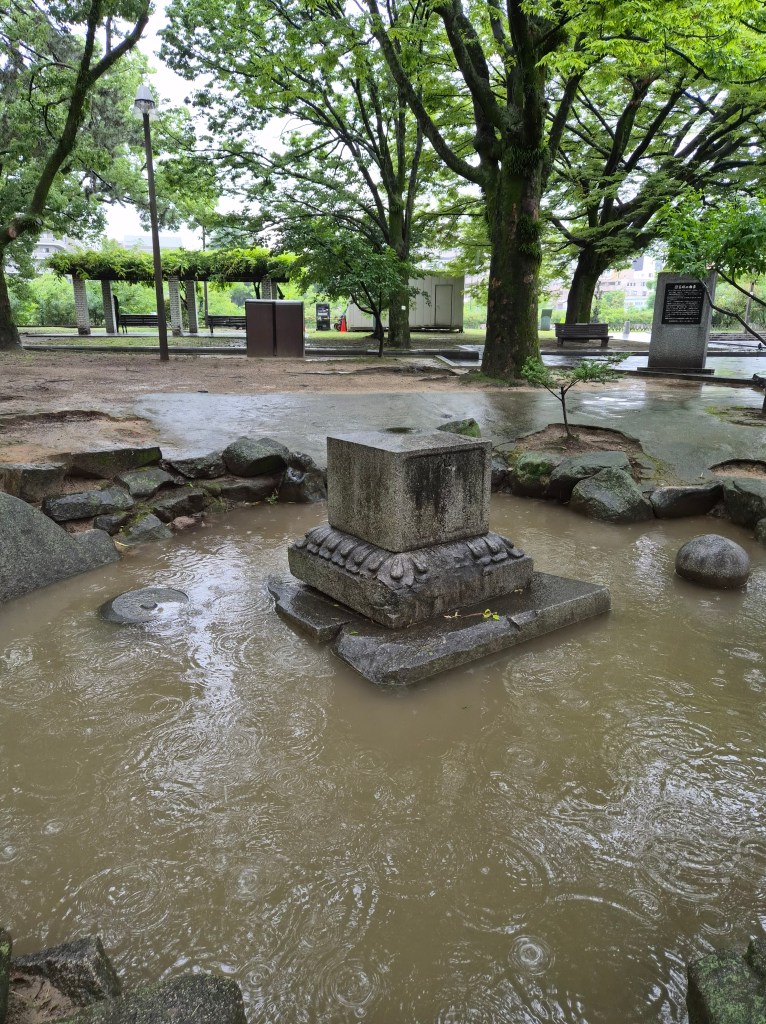
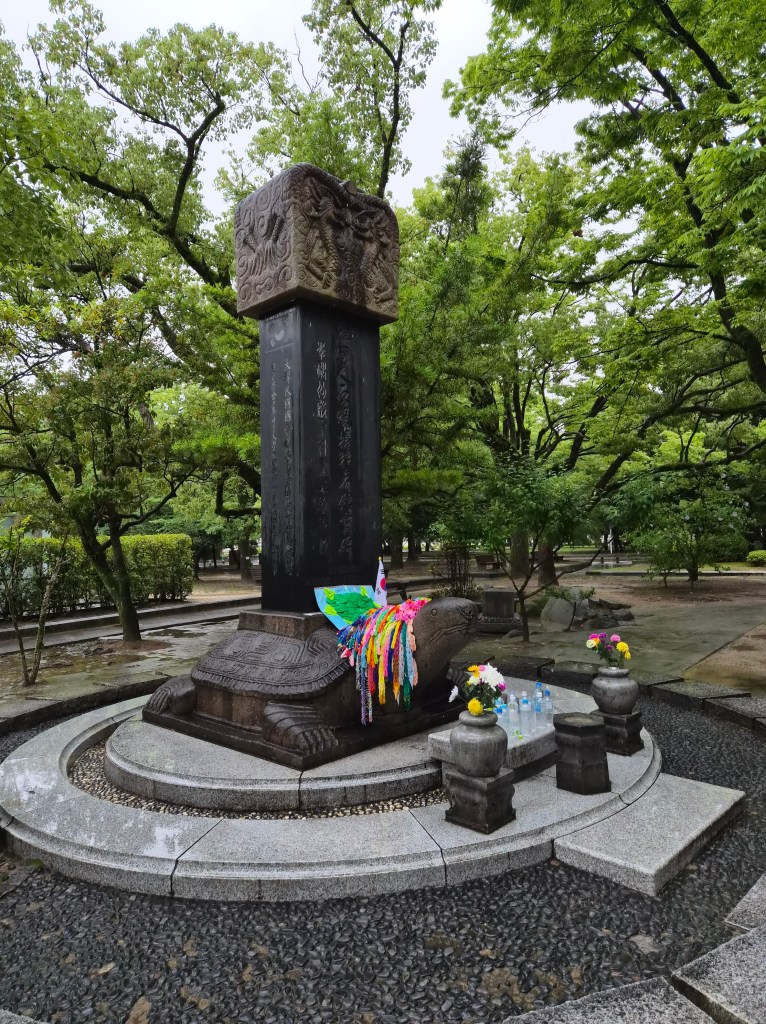
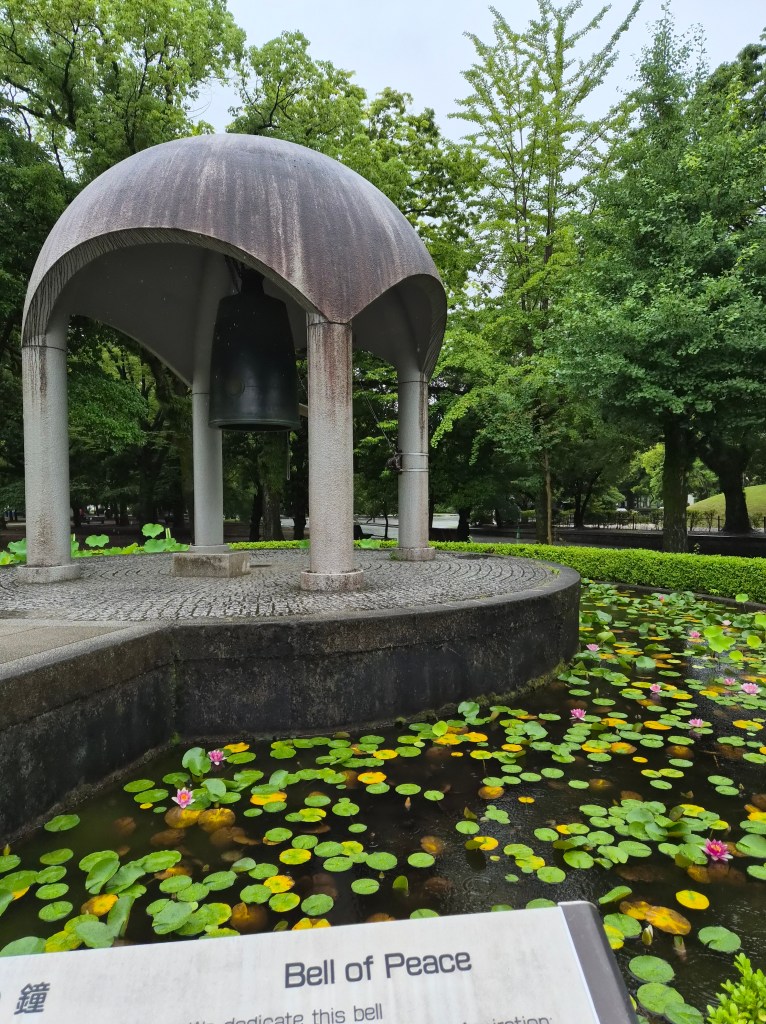
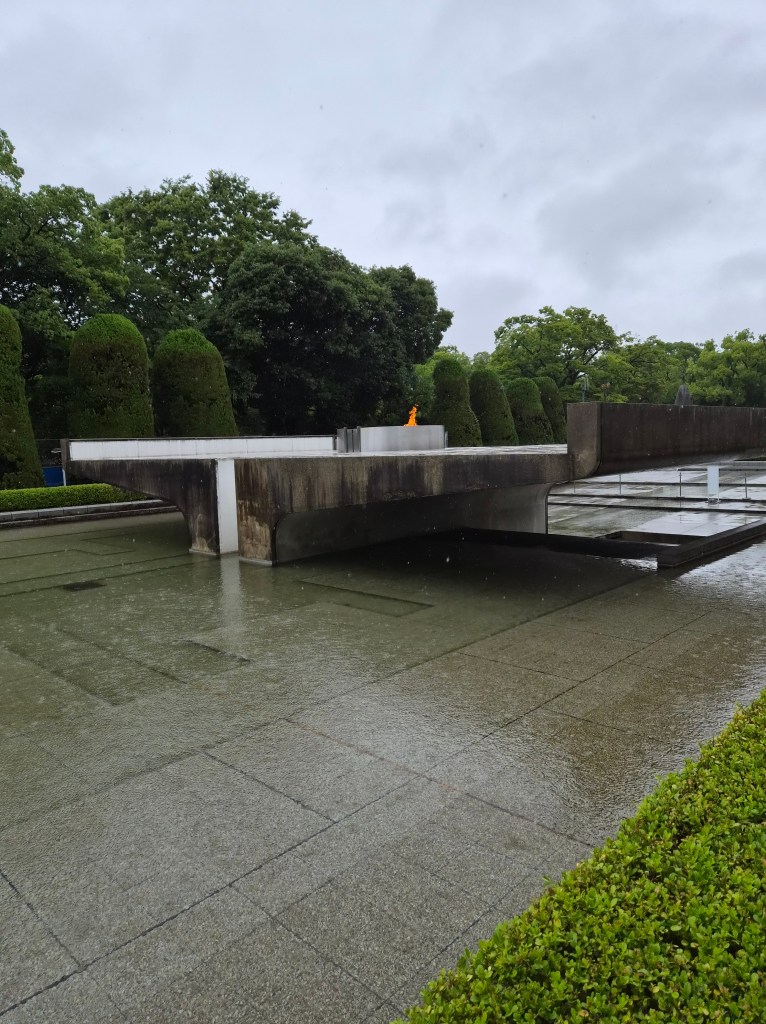
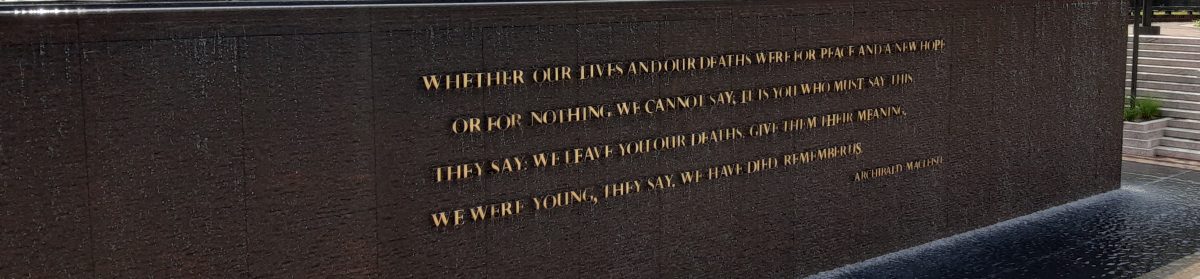
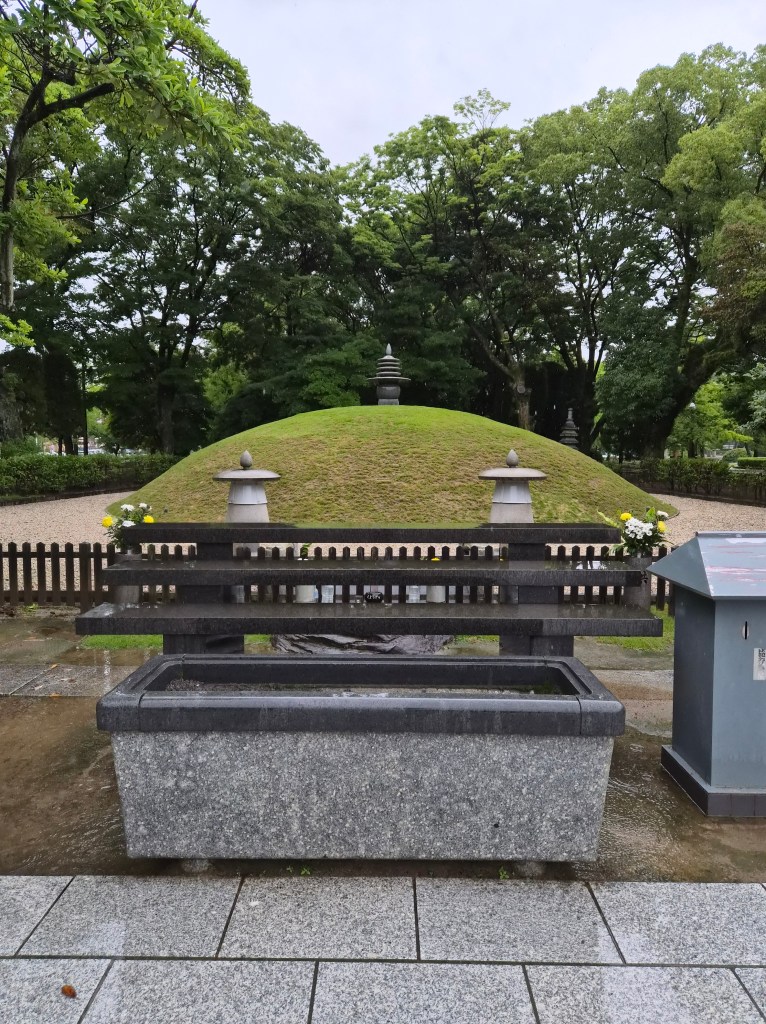
Two sites turn Hiroshima into a tomb as well as a memorial. A cenotaph, which occupies a center line alongside the Museum to the south and the A-Bomb Dome to the north, holds no ashes but creates a covered space under which the souls of the victims are symbolically sheltered. American minds will likely go immediately and unfortunately to a covered wagon, whose cover the cenotaph strongly resembles, but recognize symbols familiar to a Western commemorative eye as well: a long, reflective pool and an eternal flame that burned impressively well the day I visited, when southern Japan was experiencing a typhoon. Worse, and somewhat off the central path, is the Atomic Bomb Memorial Mound, where the ashes of tens of thousands of victims are buried in a simple and agonizing shrine. It is there that in The Book of Lights the two young rabbis stop to say the Mourner’s Kaddish, a prayer that traditionally must be recited by a quorum of ten: I stopped and did the same, alone in the rain. What else could I have done?
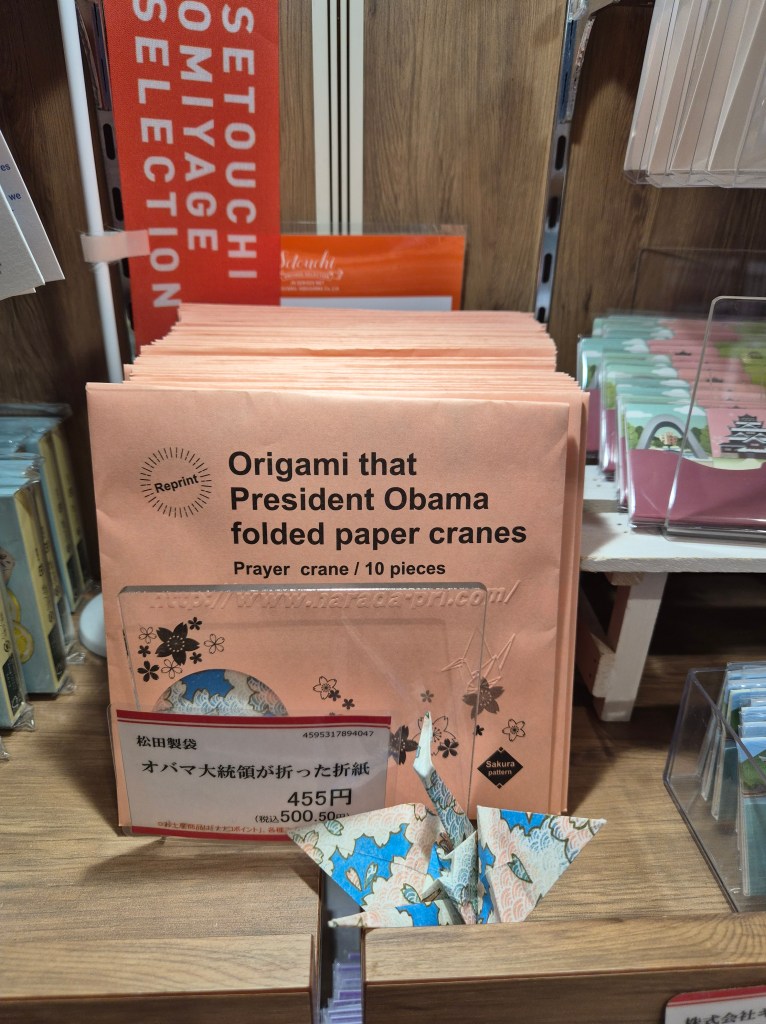
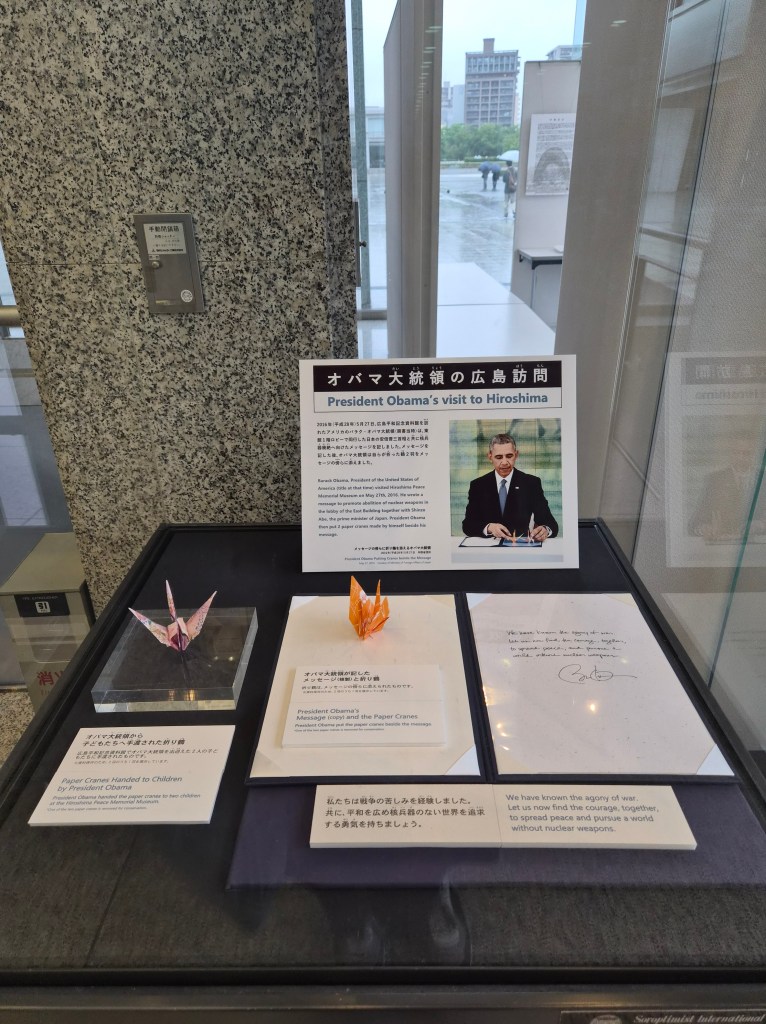
The United States is a muted presence in this space, omnipresent but rarely referenced directly. The Memorial Museum eschews historical context in favor of emphasis on human suffering, in keeping with the city’s efforts to push for nuclear disarmament and world peace. America has donated no memorial to the Peace Memorial Park, for the simple reason that doing so would admit a wrong, something which no American leader has done. President Obama visited Hiroshima in the last year of his term and offered perhaps the closest thing he could to an expression of remorse: “We have known the agony of war. Let us now find the courage, together, to spread peace and pursue a world without nuclear weapons.” The Museum keeps this note on display, along with two cranes that the President had folded himself. At Hiroshima Station, you can find the paper pattern he used for sale in one of the omiyage shops.
What of us ordinary Americans, then? What does it mean for us to visit this site? I circled the park until I was soaked through – nearly a week later, my shoes have not fully dried. I left without answers, my mind returning, as it often does in these moments, to the words of Jewish liturgy, the words we use when our own cannot suffice. Magnified and sanctified may His great name be, begins the Mourner’s Kaddish, in the world He created by His will. It did not escape Potok’s notice that many of the scientists whose work made the atomic bomb possible were Jews. Fleeing one nightmare in Europe, they lived to witness a different another halfway around the world. Both nightmares were a part of the world we have all inherited. May He who makes peace in His high places make peace for us and all Israel, the Kaddish concludes, and for all who dwell on Earth, my congregation taught me to add – and let us say: Amen.
As a historian, I know better than to take a definitive stance on whether the bombing itself was “right” or not. As a child of the twenty-first century, I have only known a world with nuclear weapons. And as a descendant of those who fought on the European front during the war and those who helped the home effort, I know I can take no personal responsibility for what was done to Hiroshima. And yet. Modern Hiroshima contains many other sites you can visit as a tourist, from the reconstructed Hiroshima Castle in the city itself to the various natural and culinary wonders one can sample around the prefecture. Culpable or not, something in me told me I had no right to enjoy those sites. I returned to the train station and boarded the Shinkansen north to Kyoto.
Kyoto
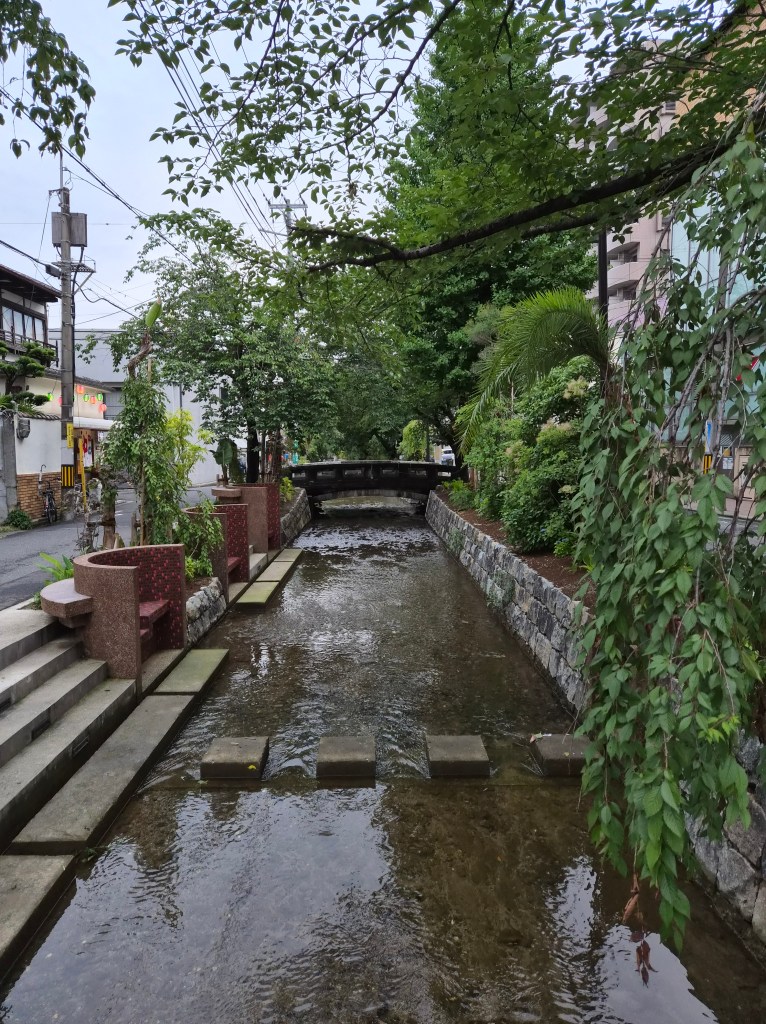
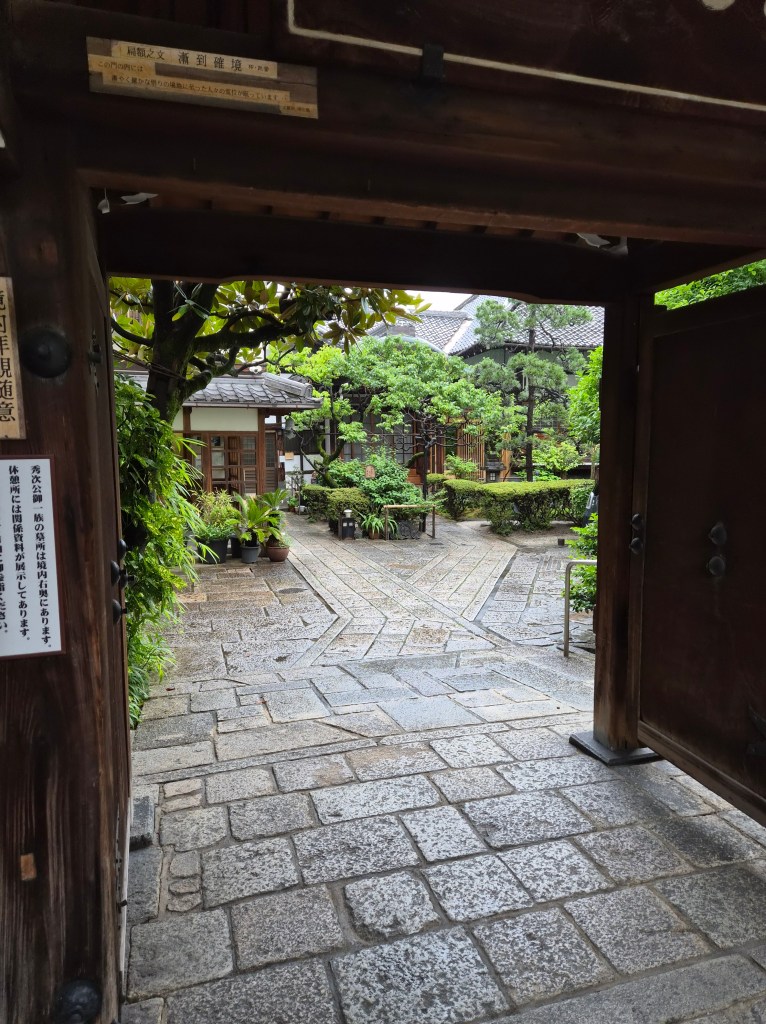
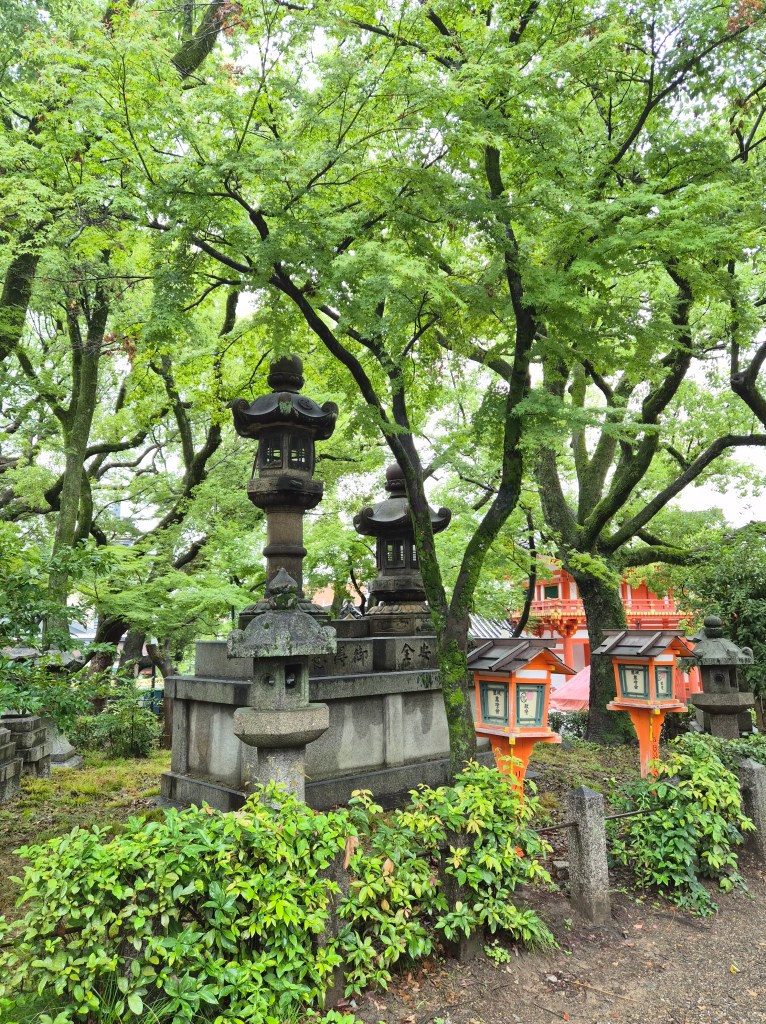
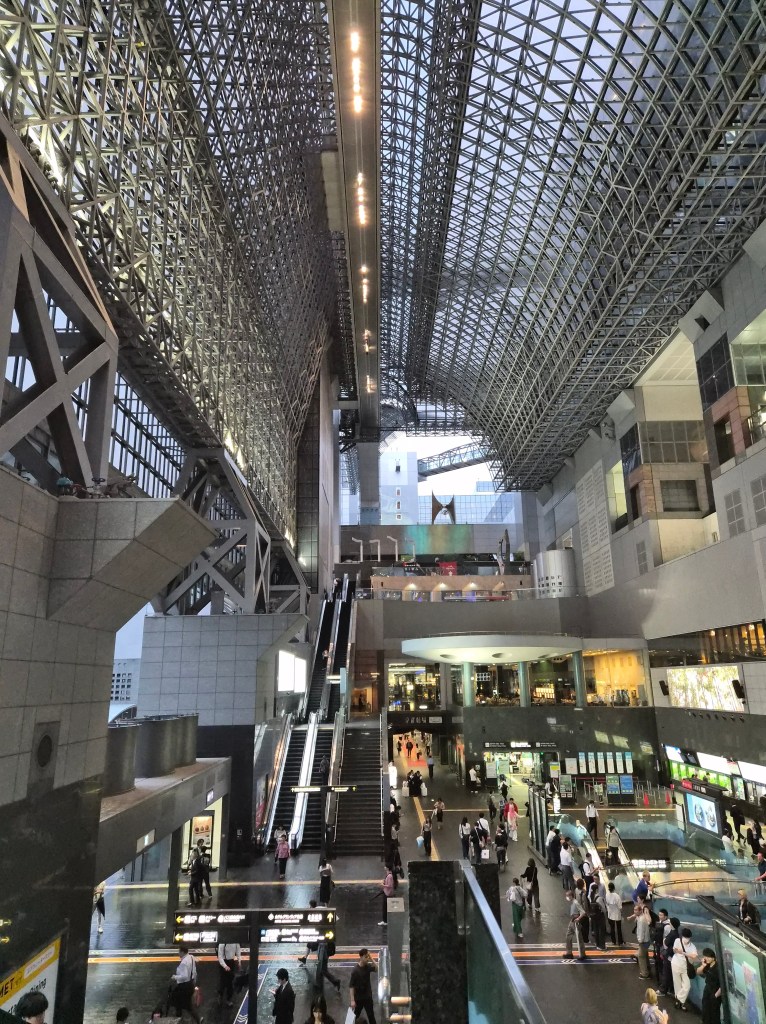
Hiroshima is not exactly overrun with tourists, at least not yet, but Kyoto is a different story: it seemed that from our Airbnb, every time I looked outside I saw another white person jogging around, and nary a Japanese resident in sight. Airbnb also sent me a warning on appropriate behavior in Japan as soon as I had booked the rental, which has never happened to me in all my years using it elsewhere. My friend met me at Kyoto Station and showed me around a few of the key sites the next day: the Yasaka Shrine, the grounds of the former Imperial Palace, several of the covered marketplaces. The influx of tourism has led to extensive signage reminding visitors of appropriate behavior. I was relieved to see signs at the shrines that Tokyo has not yet installed: areas where photography was forbidden, areas restricted only to worshippers, and reminders everywhere that these shrines, beautiful as they are, are first and foremost holy ground.
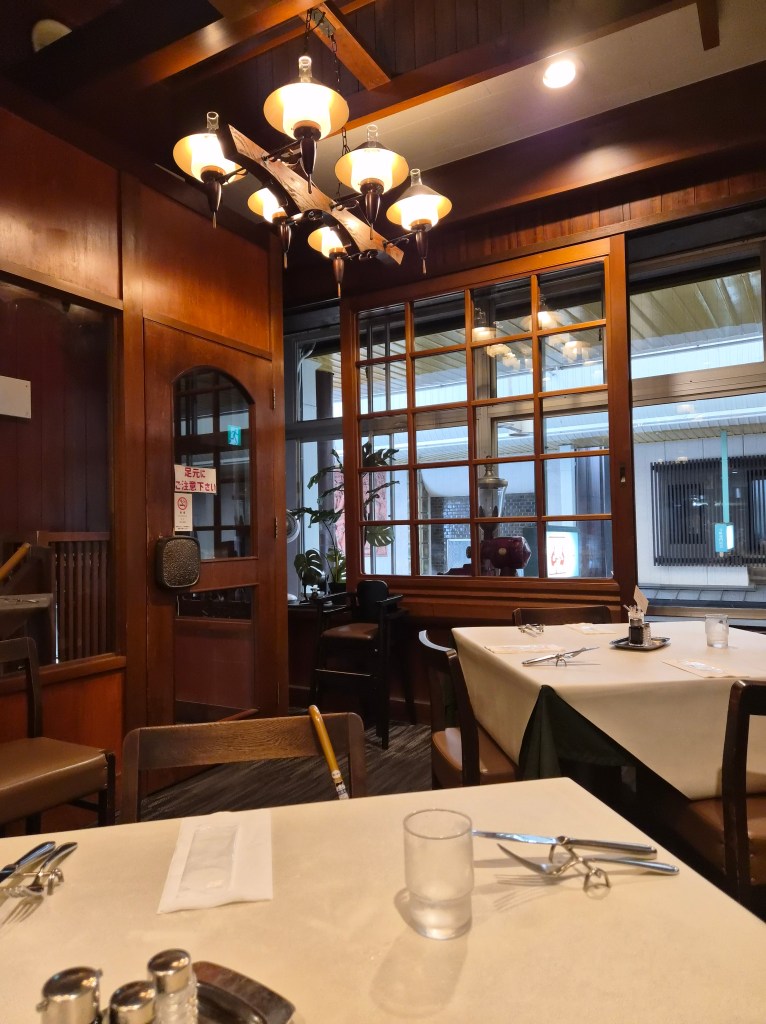
Overtourism has had one benefit, at least for travelers like me: everywhere we went, we found food that I could eat. Some places, like an old-fashioned coffee shop frequented nearly entirely by elderly and extremely refined Kyoto residents, adjusted their dishes to remove meat on request; others provided vegan options without prompting. On our second night, the prospect of a restaurant that offered four different vegan meals to choose from alongside its regular meat-friendly menu reduced me to tears. But we steered clear from many of the other sites, including the well-trodden bamboo forest and the Golden and Silver shrines, wary of the dense crowds we hit anytime we ventured near one of the hot spots. We did not need to see them to get a sense of the city’s restrained elegance: instead we found a dessert place that specialized in mont-blancs made from the prefecture’s chestnuts and marveled at the courtesy with which the waiters offered to let us go see the extravagant patisserie being made. Perhaps I will return someday, but for the present it was enough to know that the city’s treasures were saved, and that the world enjoys them, even as Kyoto works to ensure that they enjoy them in a moderate and respectful way.
A Righteous Among the Nations
There was one other place that I had always wanted to visit if I came to Japan, though it is considerably less accessible than Hiroshima. Deep in the province of Gifu there is a memorial to a Japanese man who I had encountered long before I knew anything about Japan: Chiune Sugihara, an employee of the Japanese Consulate in Lithuania. In 1940, ignoring the direct instructions of his superiors, Sugihara wrote thousands of transit visas for Jewish refugees fleeing the Nazi onslaught into Lithuania, affording them safe passage east through Japan. To acquire a transit visa, one had to have funds to get in and out of Japan and a destination they were headed to: most of the refugees to whom Sugihara handed these visas had neither. Faced with human desperation, Sugihara acted on the side of humanity, and dedicated nearly every waking hour to writing as many visas as he could, even throwing them from the train when his office reassigned him out of Lithuania. He issued more than 2,000 visas that allowed for whole families to travel, saving as many as 6,000 lives.
Sugihara is revered among the Jewish people – every Jew I told about this excursion, from observant to barely culturally Jewish, knew who he was. He remains little known among the Japanese, however: he lost his job with the Japanese foreign office shortly after the war (some, including his wife, suspected it was because of his actions in Lithuania), and lived most of the rest of his life in relative obscurity until he was tracked down by one of the people he had saved, at which point he began receiving honors from the State of Israel. His hometown of Yaotsu in Gifu built a memorial hall to him in 2000, but no trains run anywhere near there and the buses take several hours. And so I summoned my courage (or my insanity, for those of you familiar with my rental car misadventure in Ireland last summer) and rented us a car.
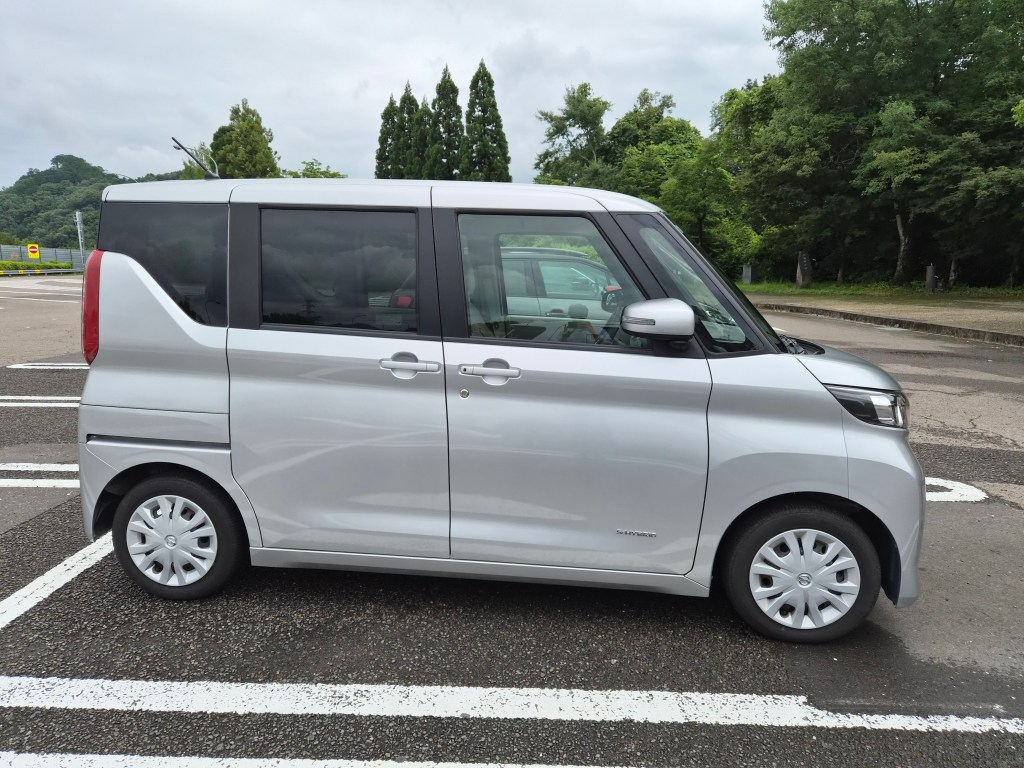
Note for all considering traveling to Japan: car rental is not for the faint of heart. To begin with, the Japanese are left-side driving country, thanks to some efforts to emulate the British (who built most of their early railways) during the Meiji Era and the fact that the samurai carried their swords on their left sides. I’d driven on the left side of the road before in Ireland, but there at least the levers for the windshield wipers and the turn signals were the same as they were in America – here they were reversed, which caused no end of comedy and confusion. We’d gotten a call the day before the rental was scheduled from the car company, who were concerned that we were attempting to see some of Gifu’s much more famous sights several hours north and did not understand we could not possibly drive there in an afternoon: they were more bemused than reassured when we told them we were in fact going to the middle of nowhere an hour east. The mountain roads grew increasingly narrow and winding as we got closer to the Sugihara Memorial, but the tunnels through the mountains were probably the most nerve-wracking. I returned the car with relief at 6:30 that night and have not missed it since.
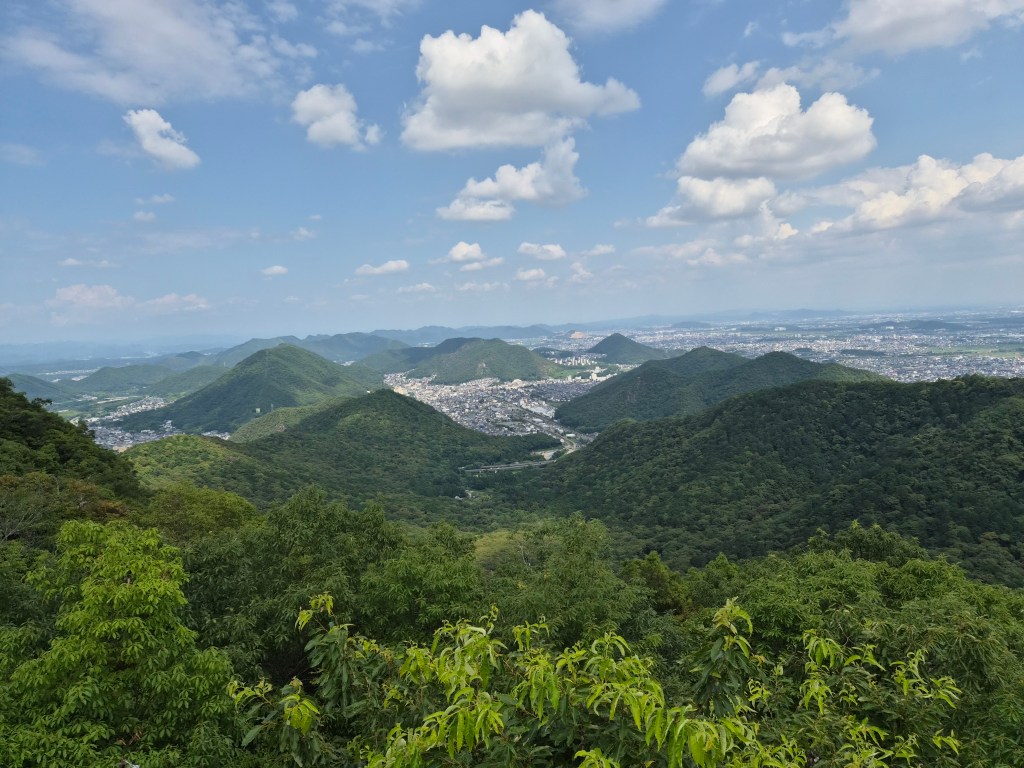
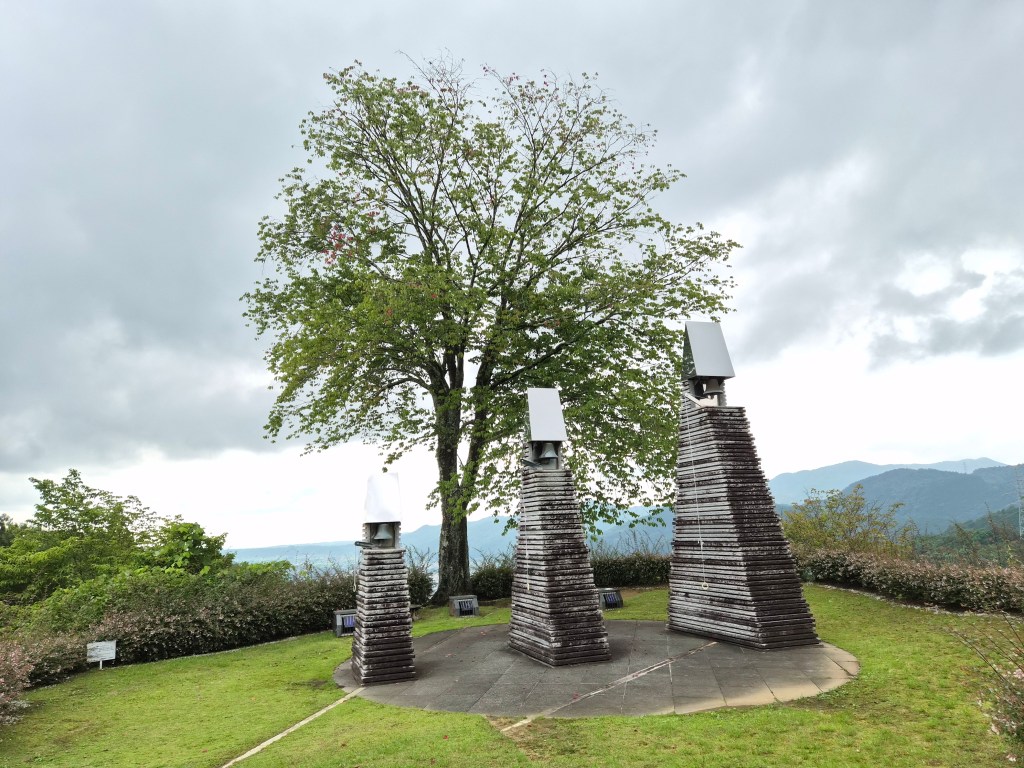
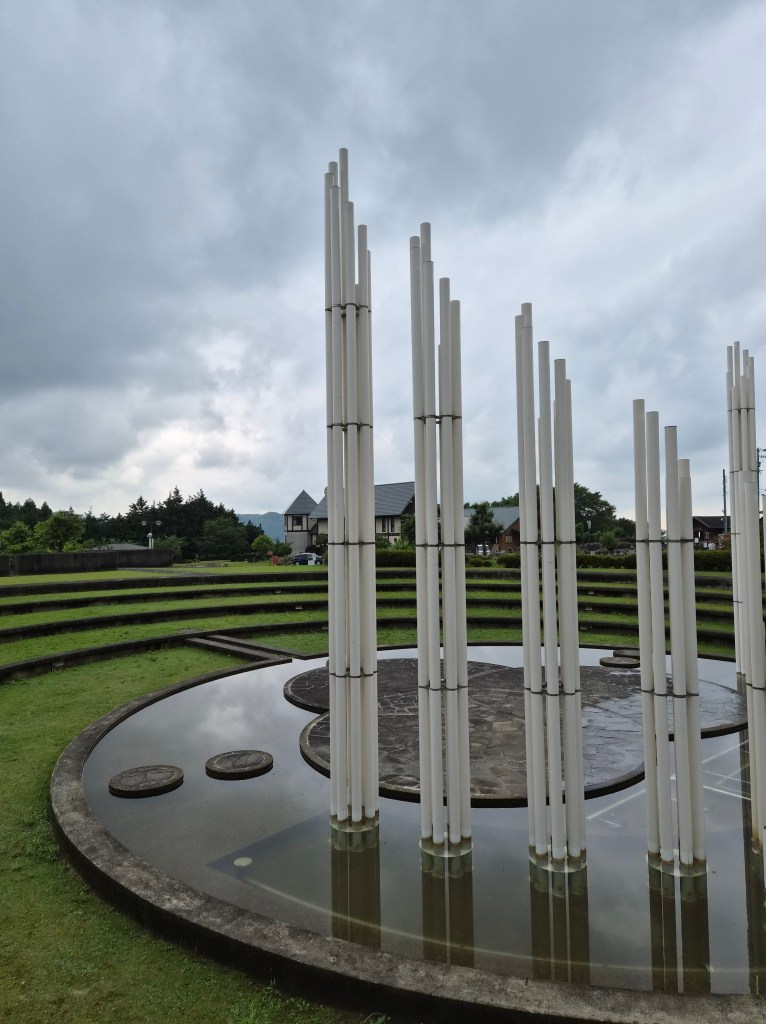
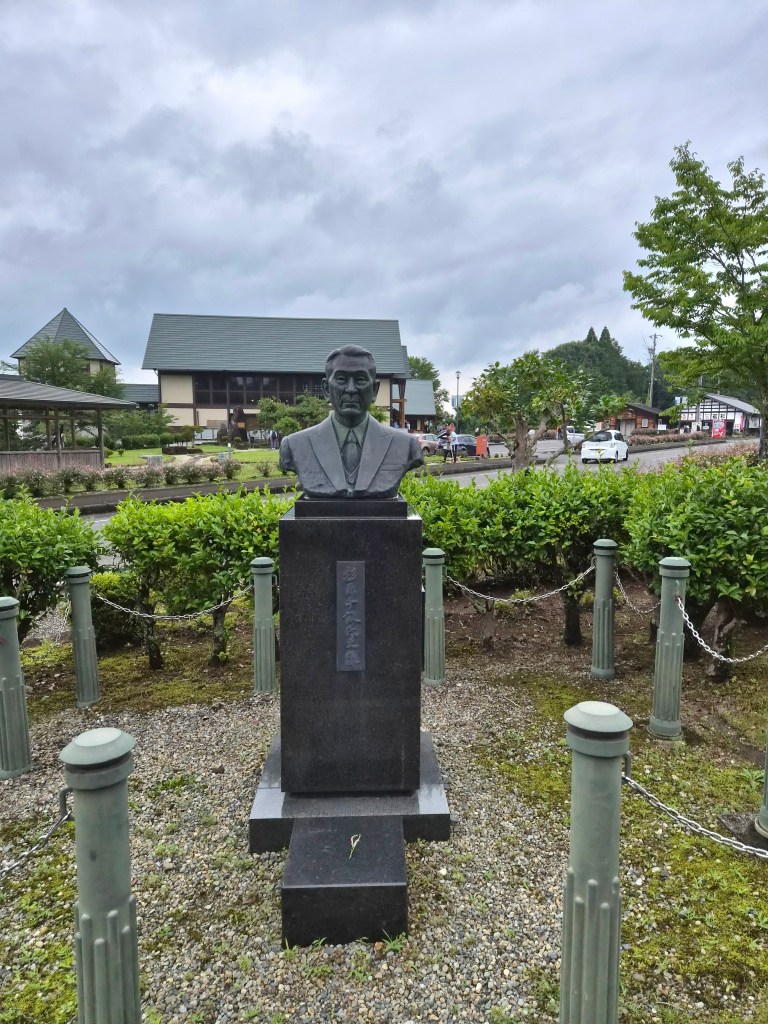
That said, Sugihara was a man entirely deserving of the trouble. His memorial is situated at various stops up the mountain in his hometown. First is the Visas for Life Memorial, which offers a stunning vista behind three towers of stone “documents” symbolizing Charity, Courage, and Spirit. Further up the road, a museum dedicated to telling Sugihara’s story overlooks the mountain view on the left, and a joint memorial built by Lithuania and Japan honors him to the right. The vast majority of visitors to this site are Israelis – a tour bus of them arrived at the same time that we did, and the museum was the only place in Japan I have seen that offered captioning in Japanese, English, and Hebrew. They knew and revered him like I did; I wondered how many people found their way here to learn about him rather than honor his life.
Holocaust education is not exactly a big thing here: it is perhaps weirdly fitting that the Japanese Center for Holocaust Education is centered in the province of Hiroshima. The museum fills the requisite background of what the Holocaust was and how it happened, and what happened to the people Sugihara could not save. But it focuses equally on the lives he rescued, making it a uniquely uplifting memorial museum for those of us familiar with the larger Holocaust Museum genre, and it does so while avoiding some of the “what would you have done?” moral grandstanding that other Holocaust museums fall into when discussing the so-called Righteous Among the Nations. This is, more than anything else, a testament to Sugihara’s character: during his lifetime he was so quiet about his act of heroism that most of his neighbors knew nothing of his life until the Israeli Ambassador to Japan showed up at his funeral. In that way, the quiet remoteness of the museum and the memorials is perhaps all Sugihara himself would have wanted.
Cars and Ruthless Warlords
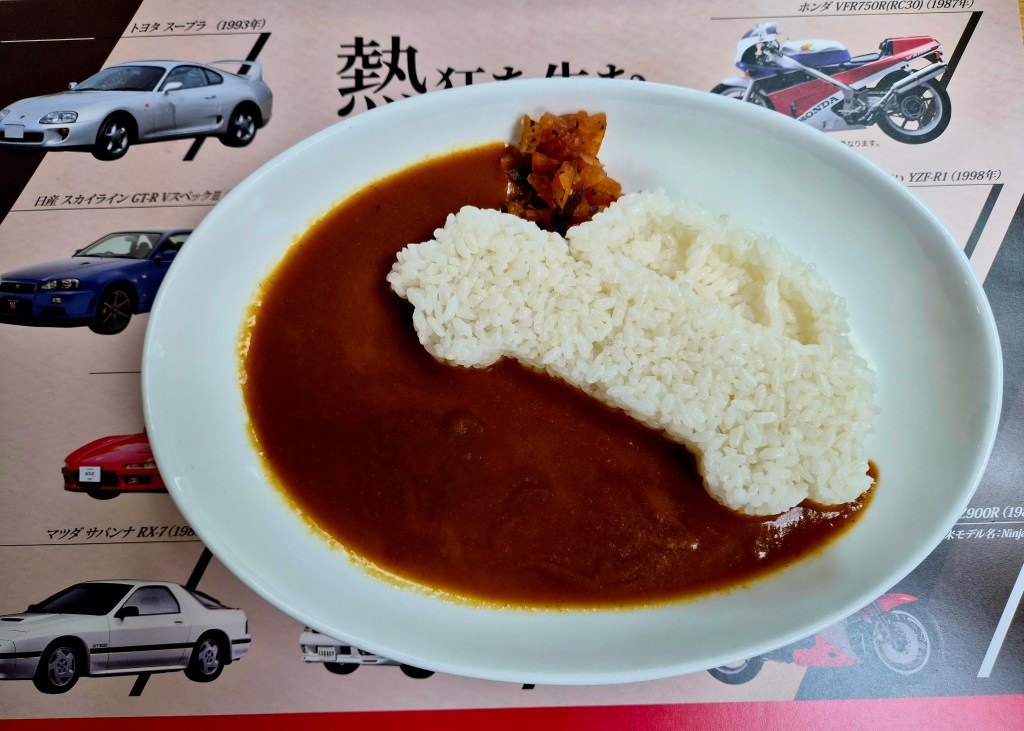
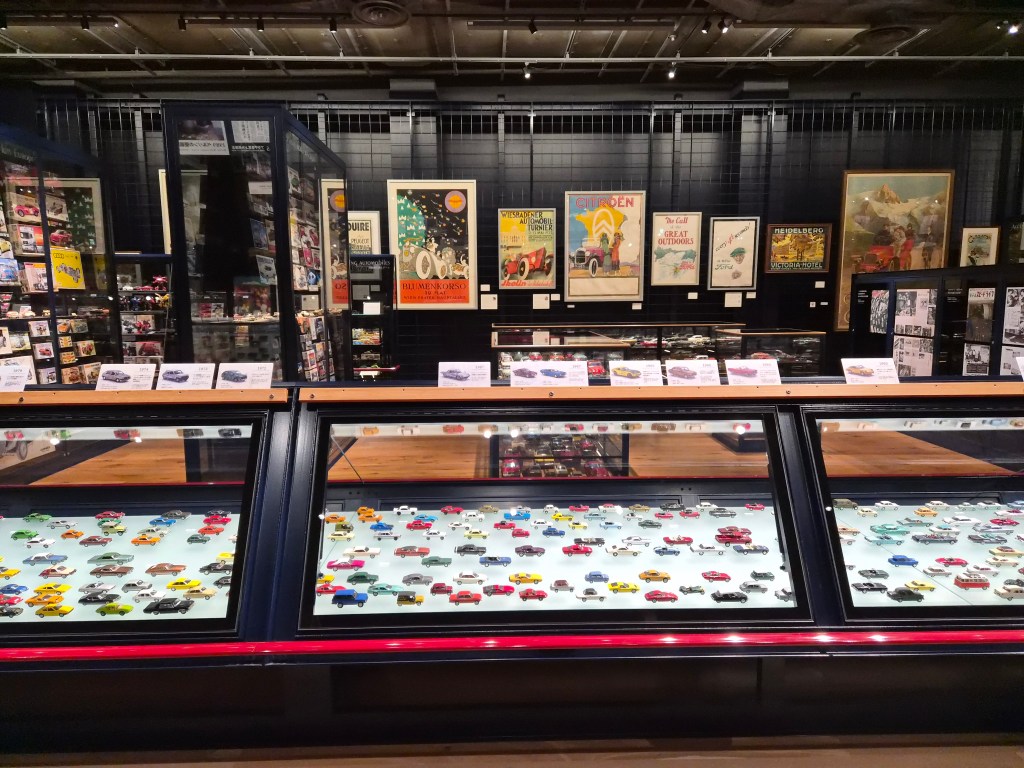
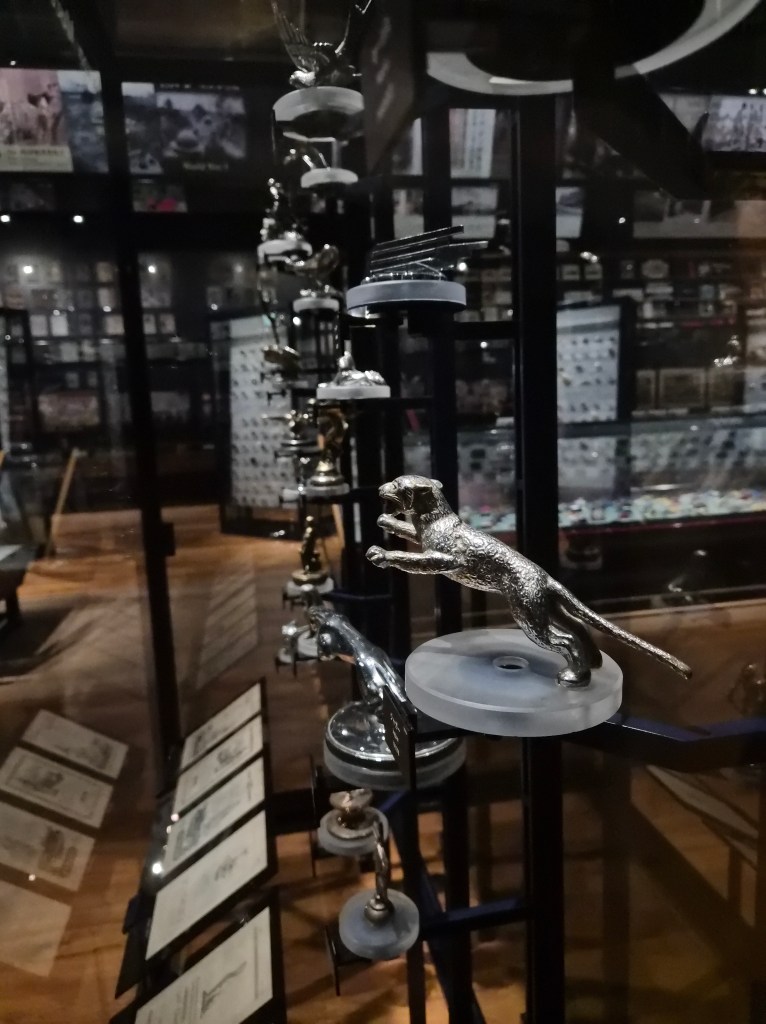
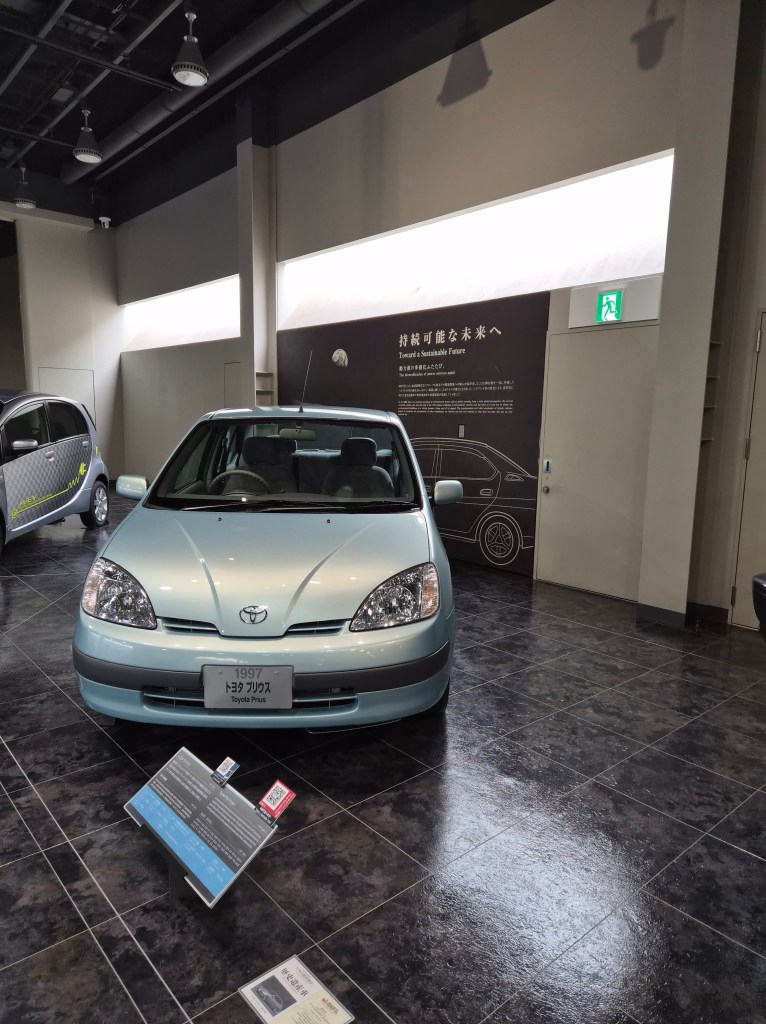
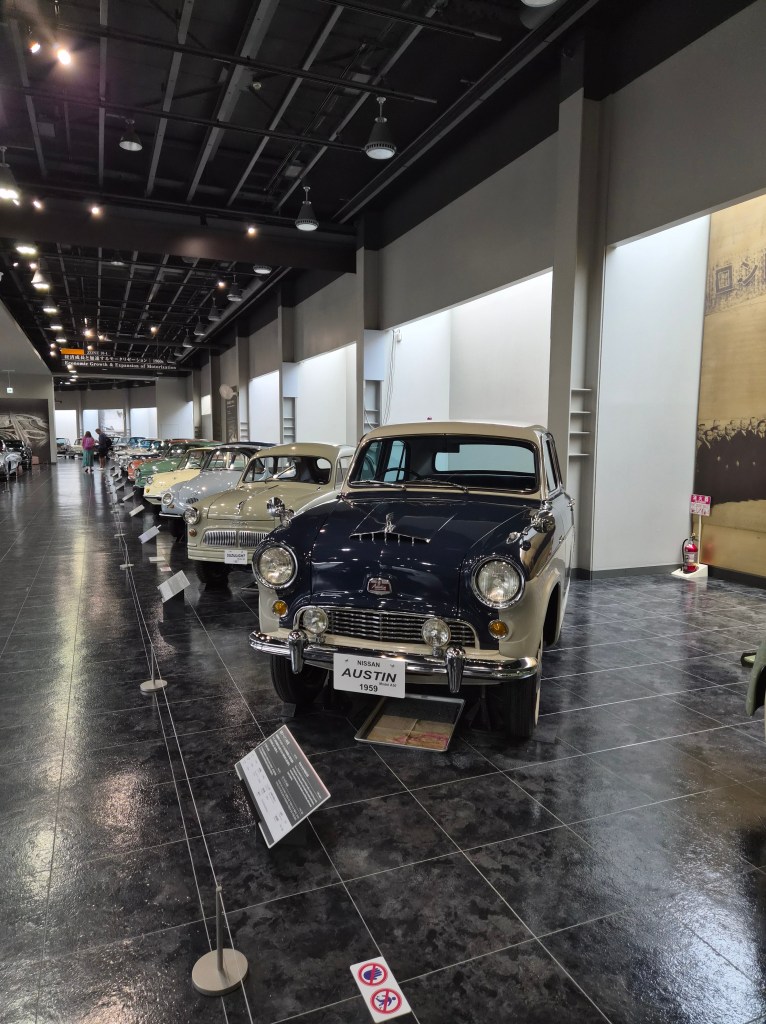
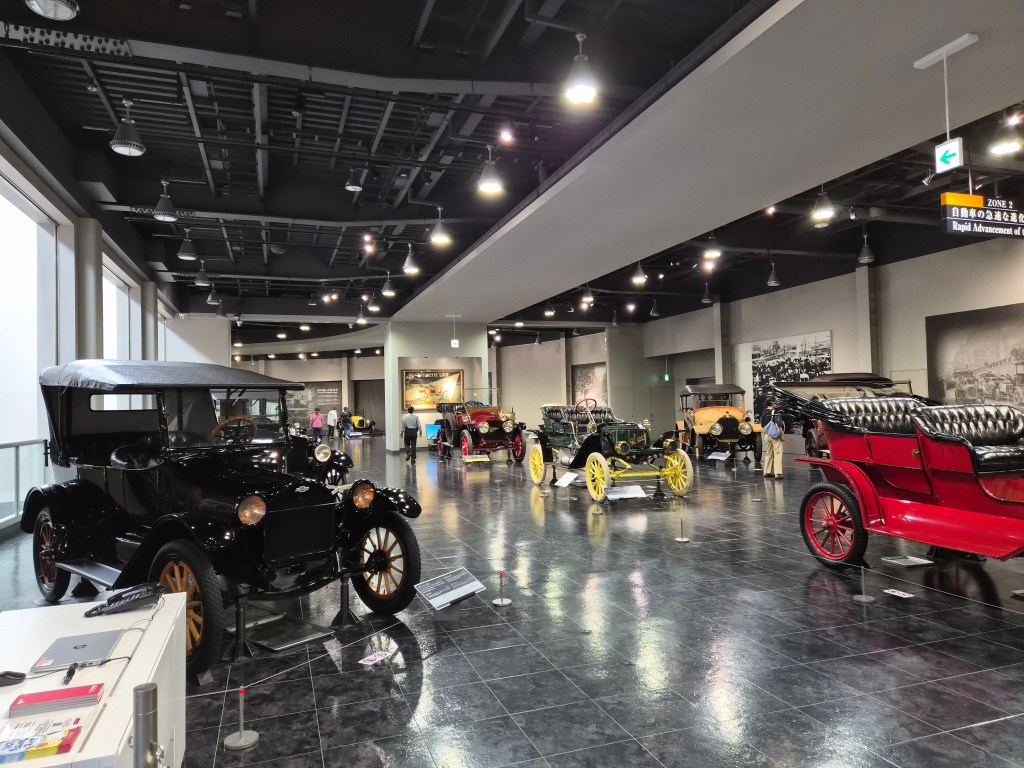
We spent another day in and around Gifu and briefly in Nagoya, learning more of Japan’s pre-and-postwar history. Nagoya is home to the Toyota Headquarters, and with it the Toyota Museum, a place I felt I ought to visit as a devoted Prius owner. We expected a museum extolling the glories of Toyota and instead found a place rooted in a love for cars and a deep pride in all Japanese automakers. No exhibit focused exclusively on Toyota, and while mentions of its particular accomplishments (e.g., the Prius as the world’s first hybrid car) were duly noted, so were the accomplishments of other Japanese companies. Perhaps most charming was an exhibit hall dedicated to car culture: license plates and vehicle figureheads, cars in magazines, in movies, in music, model cars and cars on collectible stamps. More than anything it was a tribute to Japan’s recovery after World War II, and after some of the other things I had seen in recent days, that made for a welcome change.
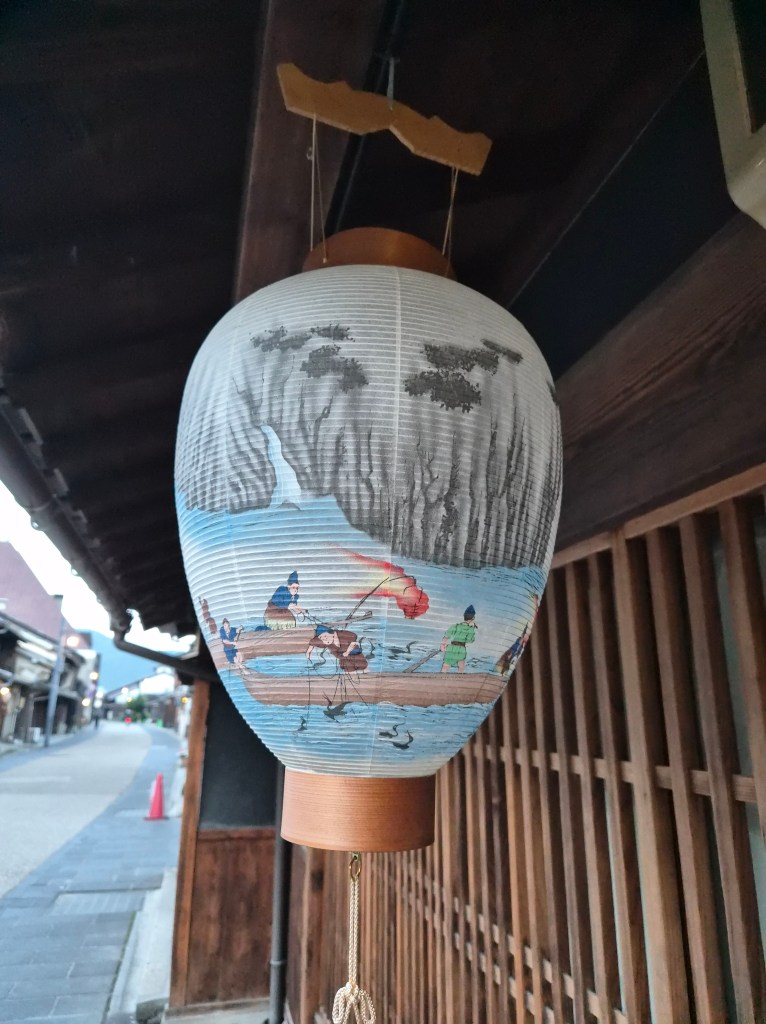
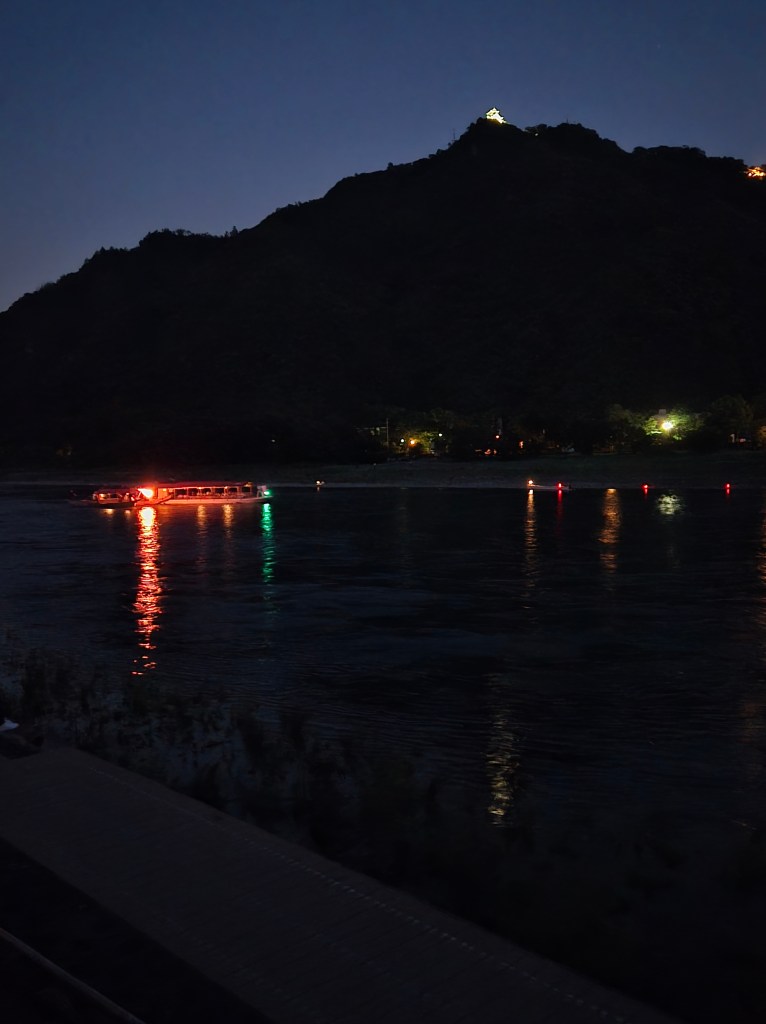
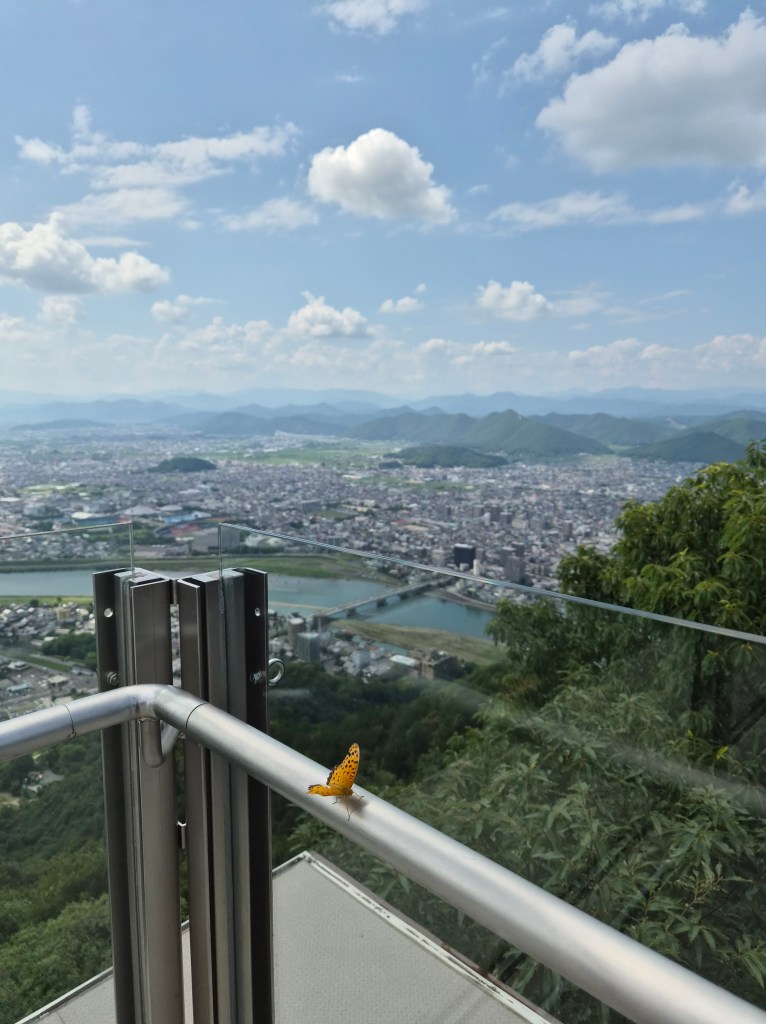
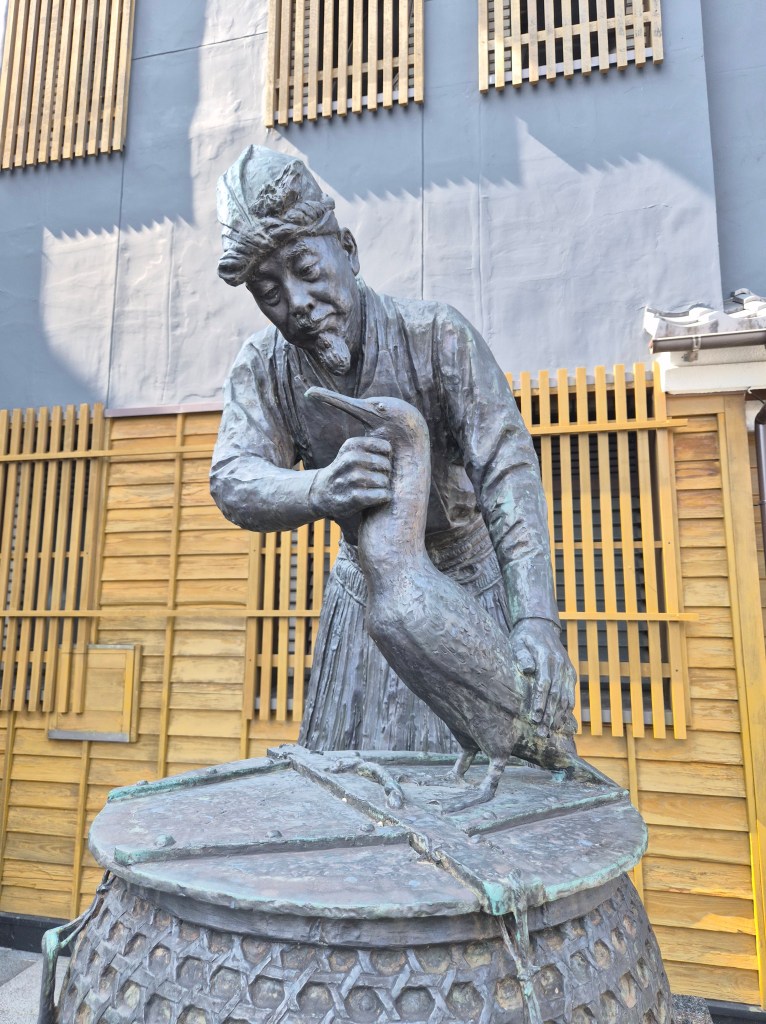
Gifu City, meanwhile, was the seat of power to the murderous sixteenth-century warlord Oda Nobunaga, who unified much of central Japan through sheer brutality. (Highlights include, but are not limited to, executing 150 monks for holding a funeral for one of his political opponents and executing a servant girl for leaving a fruit stem on the floor of the room she was cleaning; for more on his role in the wider scheme of Japanese history see the YouTube classic “history of Japan”). Perhaps reflecting the struggle other provinces are facing as tourists flock to the Tokyo-Mt. Fuji-Kyoto line of Japan and skip everyone else, the town’s welcome banner is “A Ruthless Warlord’s Spirit of Hospitality,” which I guess no one has told them might not be the most welcoming thought if the visitor knows anything about Nobunaga. The town is also famous for its traditional practice of cormorant fishing, some 1300 years old: a fisherman leads cormorants into the water by night, lighting their way with (very large) fires, and uses a snare to keep the bird from swallowing the fish. We enjoyed visiting the local onsen (hot spring baths) during the day and watching the birds fish at night, a nightly display that runs from May to October each year. But Gifu Castle is closed for renovations until next year, so – alas! – we missed out on most of the Ruthless Warlord bit.
Gifu did have one last surprise for us, however. I have always thought that one of the more useful teachings of Judaism, taught in its first iteration in the expulsion of Adam and Eve from the Garden, is that there are some mistakes one cannot return from, and whose consequences we must simply learn to live with, a thought that had been on my mind since Hiroshima. Our tradition permits us to atone, but it cannot purify us from sin since the destruction of the Temple in 70 CE. Still, I rather desperately wished for a purification ritual on Monday morning in Gifu, where, after weeks of dodging meat in every direction, my luck ran out and I took a single bite of a quiche that had ham in it.
That I realized right away what had happened, that I spat out the next bite immediately made no difference. It is difficult to describe to those who have undertaken no such ritual commitments nor follow any such arcane rules the depth of horror I felt. But perhaps it would suffice to say that while I don’t particularly concern myself with why my tradition has, say, identified pork as opposed to beef as the ultimate taboo, these laws represent for me a reminder that my life is not entirely my own, and that as I adhere to the seemingly arbitrary laws in my tradition, I am bound by its moral rulings, too. Breaking one of those rules, even one of the more seemingly arbitrary ones, seemed in that sense a moral transgression. And amidst all the despair I felt, I was angry, too: we had gone out for breakfast that day in the first place because our hotel had refused to offer anything, even rice, that had no fish in it, the latest episode in weeks and weeks and weeks of being turned away and hung up on and politely but finally refused any kind of meal accommodation.
That anger was a useless emotion: Japan, after all, has been open to the West for less than two hundred years, in no small part because of American interference, and while the United States may have done its best to remake the country in its own image, Japan remains utterly its own. From its cars to its peace memorials, from its ruthless warlords to its quiet and unsung heroes, that is both its strength and its occasional shortcoming. And perhaps as an American, so far from all I have known and in this country that my own country has so influenced, for good and for ill, perhaps that incident was its own kind of atonement.