This September, on a flight from Seattle to Chicago, I met a man who lived in Michigan and was flying home to surprise his wife. Flights into O’Hare, for anyone who has not had the unique misery of heading there themselves, often land early and then sit stranded out on the runway for half an hour. This one took a full hour, and he grew increasingly worried that he wouldn’t make his connecting flight to get home in time. I asked what he would do. “I’ll just rent a car and drive,” he told me. If he did that, he would still get there by the time she woke up.
I could make a statistical guess based on various demographic details about how he voted last Tuesday. I could probably make similar guesses about other strangers I have met in my endless trips around the country: about a retired Army colonel who lives in North Carolina and paid for me to go on a historical tour because he heard I was a student; about the man who stopped my father and me when we were out canvassing in Wisconsin a week ago to warn us that without a flashlight on, we risked getting hit by a car; about a group of women who took me out to lunch in rural Wyoming just because I had driven up to visit their town. I could, but I won’t, because I remember them as decent people, and because we must see our fellow Americans as human beings first, whatever they are to us second.
You may have heard that there was an election last week, and that while it reflects the will of the American electorate, it did not reflect the hopes of a significant minority of American citizens. This is not a what-is-to-be-done post. I have as little idea about what we will need to do in the coming years as anyone, and my helpless love for this country, born out of what it has been to many in the past and what it could be to more in the future, did not prepare me for Tuesday’s election results. It was not the first time, and I am not so naïve as to think it will be the last.
I have heard a lot of hand-wringing and a lot of sorrow in the past week. Considerable fear, too, and not an insignificant amount of fury. These are all reasonable responses, and I have felt them too. We must feel them, I would argue, because if we do not it means we do not understand what is at stake in the coming years. But these emotions will not win us allies in the long run. As much as I know that there are people wishfully thinking of secession or fleeing to another country, if we want the republic to survive, we must not make the majority of the American electorate our enemies. I do not think they will be won over in a night. It will take endless small gestures, difficult conversations, and probably years of organizing, assuming we still have a democratic state that allows for any of those things. And to achieve any of this, we will need to be certain about what we want to preserve, why we think democracy is worth saving, and why we should save even those who didn’t vote the way that we did from the tyranny of autocracy.
I myself am starting by fleeing the country.
Well, sort of. Yesterday morning I arrived in the United Kingdom, where I will be staying for the next six weeks to conduct research, yes, but also to take a step back, to learn something new, and to remind myself that there is great beauty in this world, even amidst our despair. I had planned this trip before the election, so I cannot say I left with the intention to gather myself before a second Trump term, or to conduct some kind of comparative study between the United States and the United Kingdom. All the same, the timing seems almost bitterly fitting. “The best thing for being sad,” wrote T. H. White in his beloved adaptation of King Arthur, The Once and Future King, “is to learn something. That is the one thing that never fails.” The world is wide, and I wish to see what I can of it, to learn more about how other places work and to learn more about my country in their reflections. And there is nowhere I have wanted to see more than the UK, whose literature and whose history have fascinated me since I was a young child.
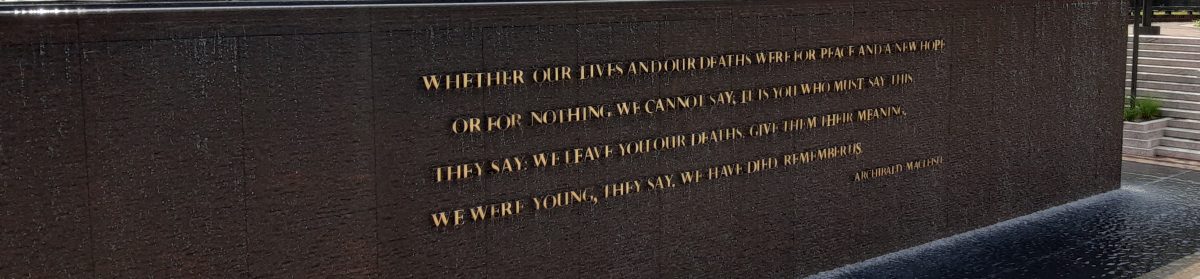
There was another reason to come specifically to the UK and specifically at this time, however. It was British authors and poets who first triggered my interest in World War I: J. R. R. Tolkien, Wilfred Owen, Ford Madox Ford. We observe Veterans Day today in the States, of course, which shares its origins and its date with the UK’s Remembrance Day, but comparing the two is like comparing a gust of wind to a hurricane. Here, they take the rejoinder Lest We Forget seriously. There is not a memorial in London that is not decorated with wreaths of poppies, and citizens of all ages and backgrounds wear poppies pinned to their chests or strung onto their zippers. I even saw one construction company put up a Remembrance Day banner in a space that normally would list commercial information about their current project. Of course nothing is universal, and so there are many people wandering around without poppies today and thinking of something entirely other than World War I, but there is a significant difference here from the Veterans Day Mattress Sales that the United States can offer, and I wanted to see it for myself, and to learn what I could from it.
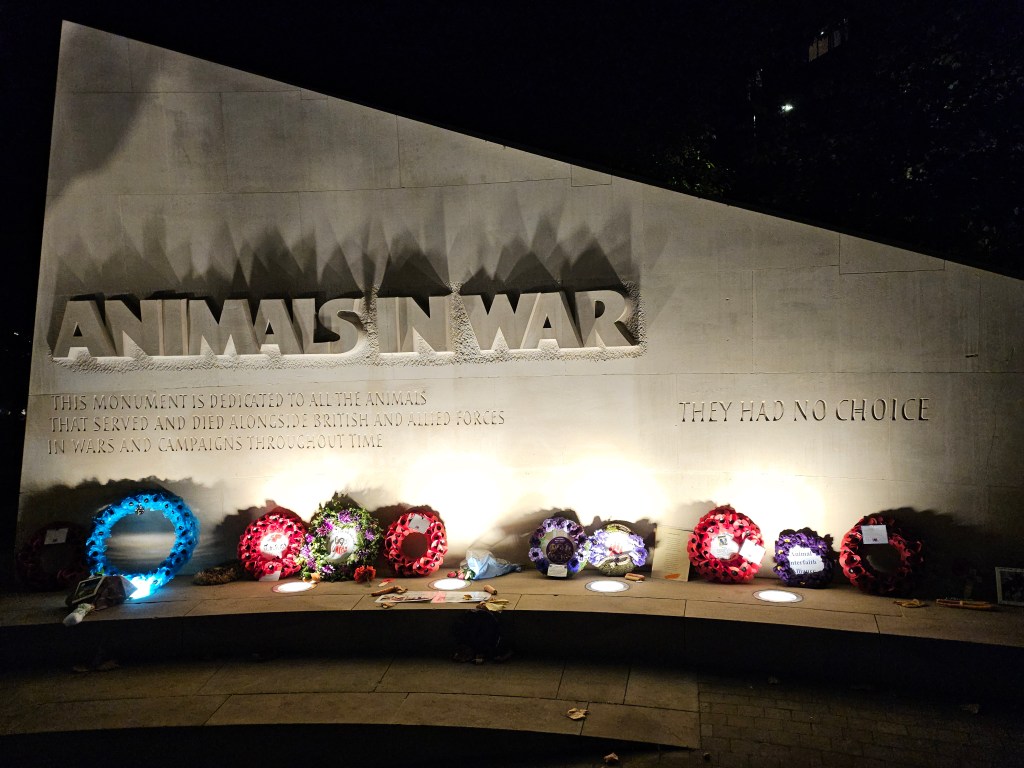
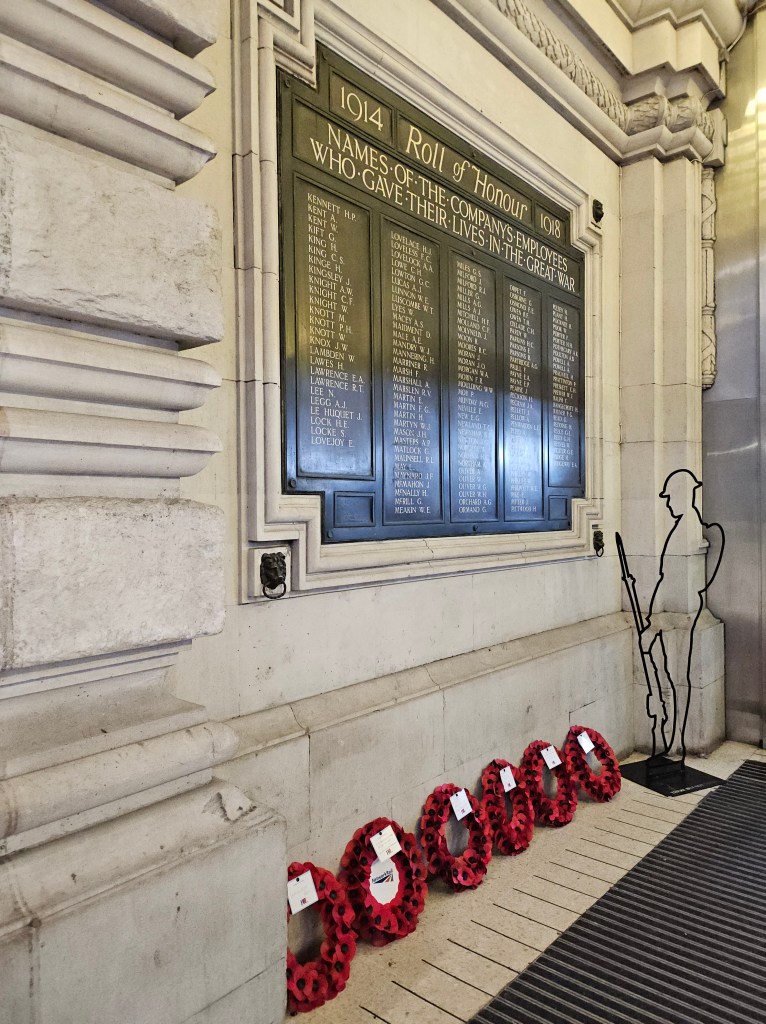
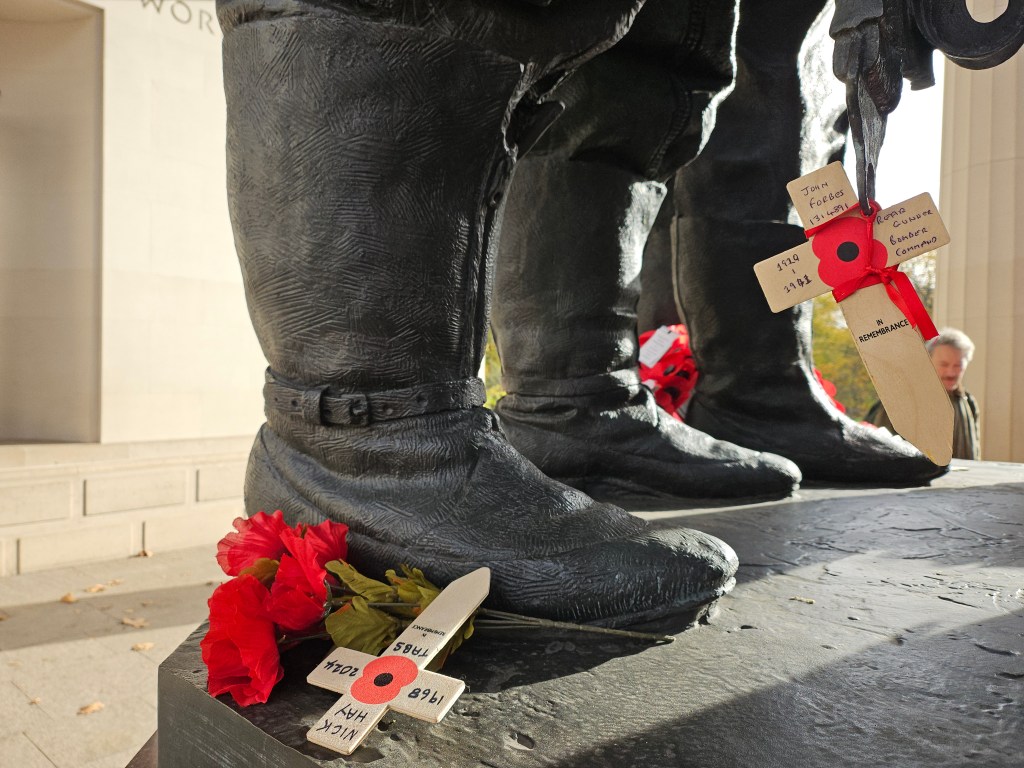
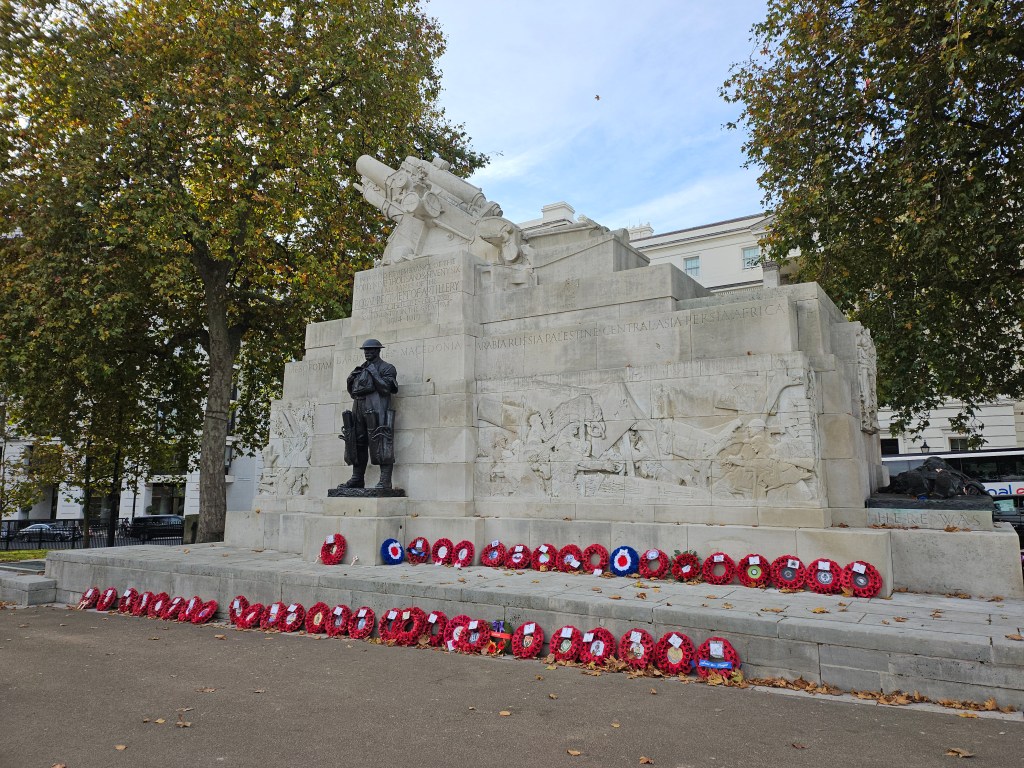
Technically speaking, the UK marks both a Remembrance Sunday and a Remembrance Day, the former taking place on the second Sunday of November, the latter on November 11, the day hostilities ceased in World War I. Customs are somewhat split between the two: a national two-minute moment of silence and the Royal service at London’s most famous World War I memorial, the Cenotaph, are held on Remembrance Sunday; other ceremonies and parades mark the 11th. Yesterday, my plane touched down at Heathrow at 10:54am. We taxied until 10:59, whereupon our plane powered down, as did the planes in line ahead of us, and our captain came on to tell us that even here, in the middle of the UK’s busiest airport, which itself is part of the busiest city airport system in the world, all traffic is suspended for two minutes at 11 a.m. on Remembrance Sunday to observe the national moment of silence. Once, Americans did the same on November 11, and nominally, President Obama endorsed a two-minute moment of silence for us in 2016. When I was young, we sometimes paused at 8:46 a.m. on September 11 to remember a different kind of victim. How difficult it is to imagine us doing anything of the kind now.
Having no interest whatever in the King or the monarchy (it’s the American in me, I used to joke, although apparently we are not so disinterested in monarchs as we once were), I was not sorry to miss the Royal ceremony on the 10th. The ceremony on the 11th, however, has been run by the Western Front Association since 1980 (what happens when Armistice Day and Remembrance Sunday fall on the same day is unclear to me – probably the WFA must yield to the Crown?), and it focused first and foremost on the common soldier. It was to that ceremony that I came this morning, where a crowd packed in around a memorial that came to symbolize all of Britain’s helpless grief in the years after the war. A cenotaph is an empty tomb, and this particular one served as a pilgrimage site for thousands. It is far from the most exciting statue on Whitehall, which runs from Trafalgar Square down to the Houses of Parliament and features dramatic sculptures of men on horses and all the usual drivel. The Cenotaph, however, was the one that spoke to the people, for it said nothing and it made no claims, and most found that that was the easiest way to understand World War I in the end.
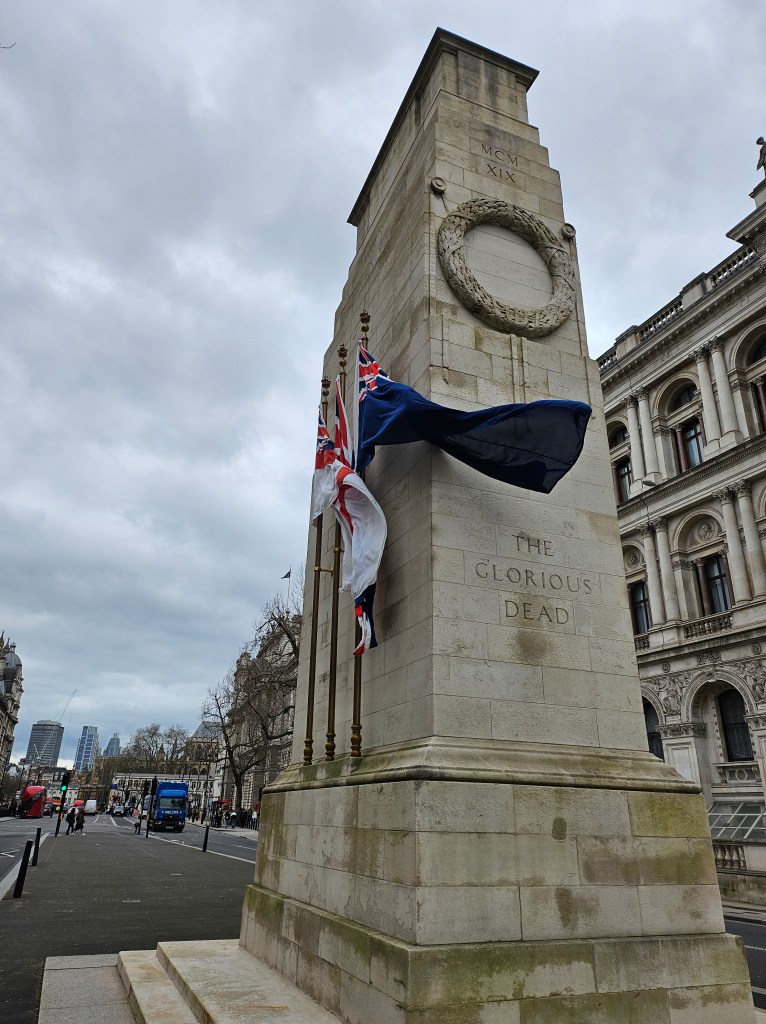
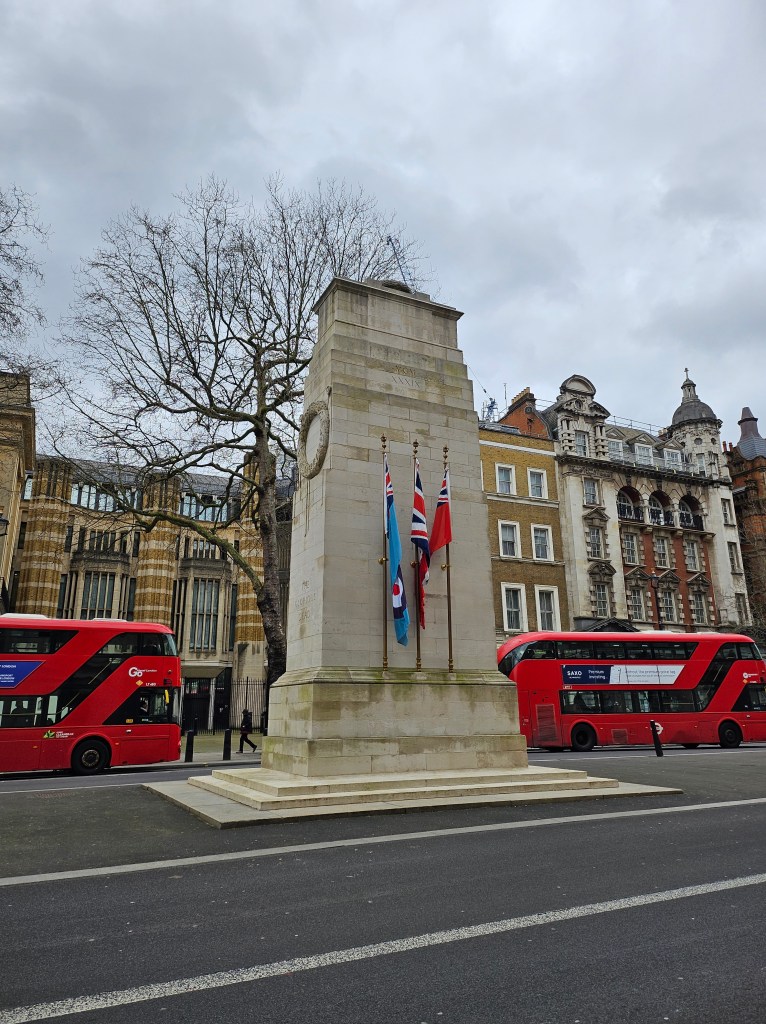
The ceremony was short, perhaps a half hour in total, and it was attended by people of all ages and races, all the vestiges of what was once the British Empire. I stood behind two veterans, who were dressed in business suits but gave themselves away by shifting automatically into parade rest when the Last Post sounded. A two-minute moment of silence was again observed, various parties came in to lay their wreaths, there were a few readings, songs, and a prayer, and everyone went on their way. It was, quite sincerely, astounding.
I visited Arlington National Cemetery last summer and watched the Changing of the Guard at the Tomb of the Unknown Soldier, and I will admit freely that I found the whole thing vaguely repulsive. It was not the guards themselves, nor the soldier, which was a particularly powerful gesture to make given that the soldier might not have been white or Christian, and yet receives the highest honors the nation can give him. It was the fact that everyone there had their phones out, and was watching through their screens, there to observe, but not to reflect or mourn. Thus I was astonished to see at this ceremony that no one had their phone out. There had been no instruction to turn them off, nor to silence them. And yet people kept them in their pockets and out of sight, to such a degree that the single selfie stick I saw brought a wave of secondhand embarrassment. Does anyone remember what it was like when we could still shame people out of turning a solemn act into a spectacle? That such a thing was still possible somewhere in the world was more than I could have imagined, more than I could have hoped for.
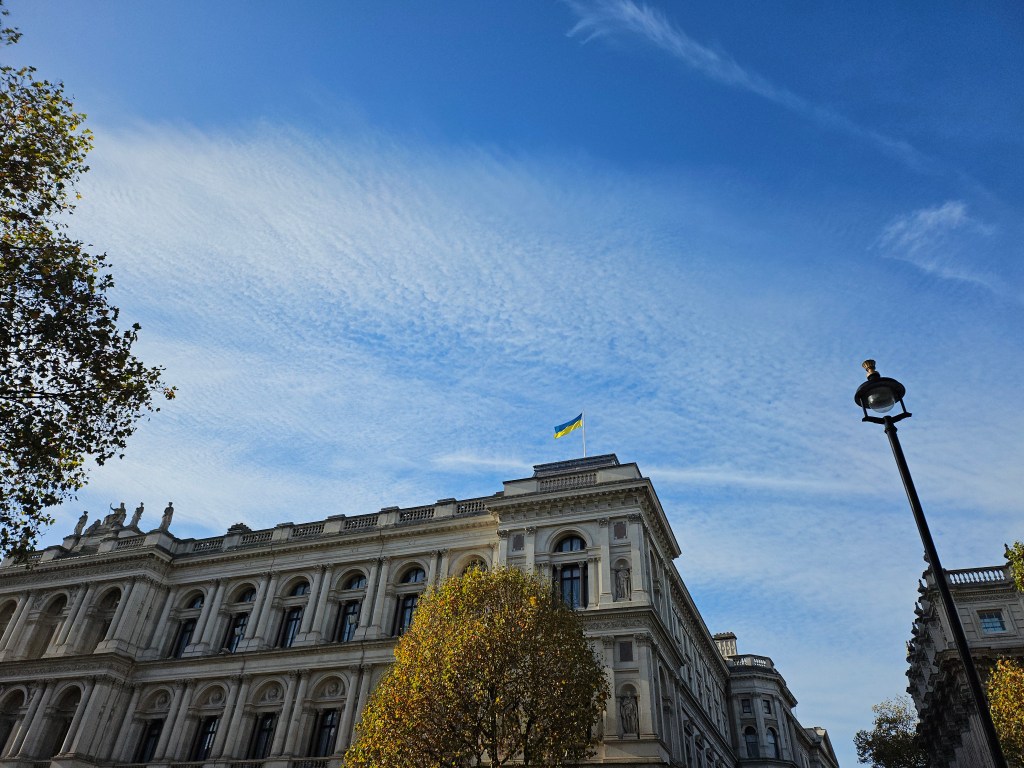
“It’s not as if we’re here for fun,” I heard one woman say to her friend on the way out of the event. And indeed, they really didn’t seem to be. Instead the whole affair had the feel of a sacred ritual – something you do because you should, because it is important to set aside time to honor those who came before you and those who are still suffering in this world. Because both of those things, even now, still matter. High above the ceremony, I noticed the Ukrainian flag fluttering atop one of the street’s many government buildings. Soon it may be that the United Kingdom rises to speak for the Ukrainians in a role once occupied by the United States.
Shortly after the ceremony I took the train out to Brookwood, England, the town which is home to the largest Commonwealth war cemetery in the United Kingdom. Largest is relative, of course: in Brookwood, there are about 5,000 graves; in the largest Commonwealth war cemetery in the world (Tyne Cot in Flanders, Belgium) there are 11,000; in some of the cemeteries of other belligerents in World War I there are 15,000 (the American Cemetery in the Muese-Argonne region, France), 44,000 (the German cemetery Langemark, in Flanders, Belgium) or more than 60,000 (Douamont, the joint French-German cemetery in Verdun, France). I visited all four of those sites this spring on a tour of the Western Front, but there was still something about Brookwood which I found peculiarly touching. Perhaps it is the sheer variety of graves that it holds. Soldiers from all corners of the Commonwealth are buried there – Canada, India, New Zealand, Australia, South Africa, and of course the United Kingdom itself. In addition, the cemetery holds Polish, Czech, Belgian, French, German, Italian, and American graves. All but the Americans are under the control of the Commonwealth War Graves, the organization which maintains British cemeteries throughout the world. The American dead are under the control of the American Battle Monuments Commission, which does the same for American soldiers.
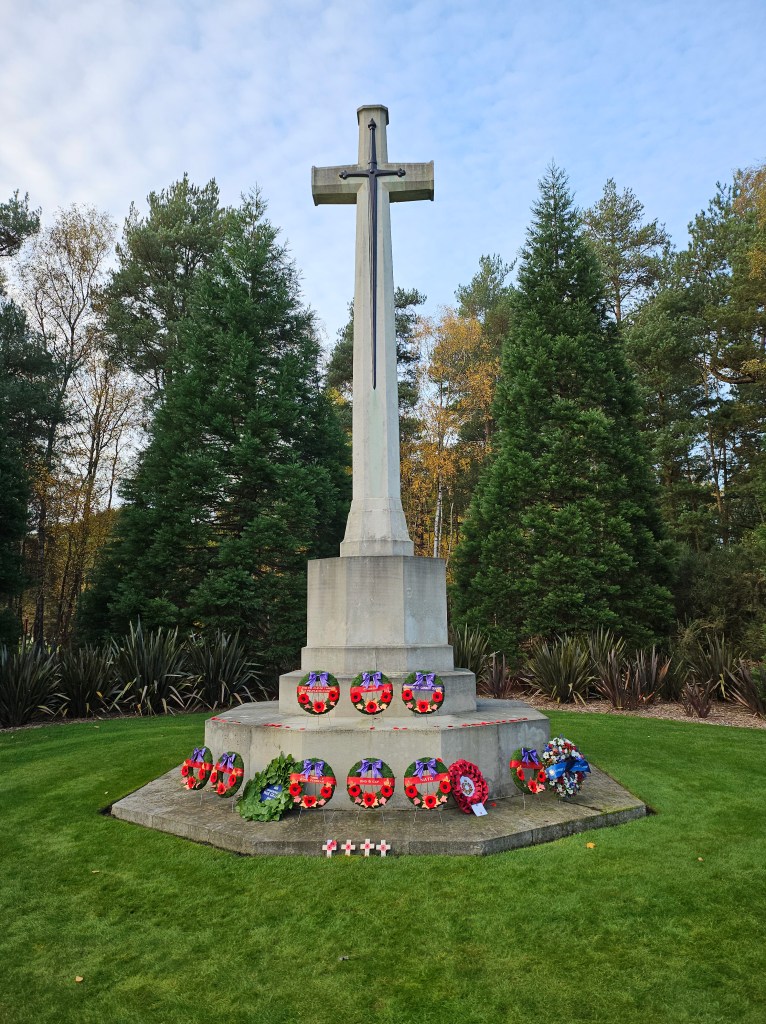
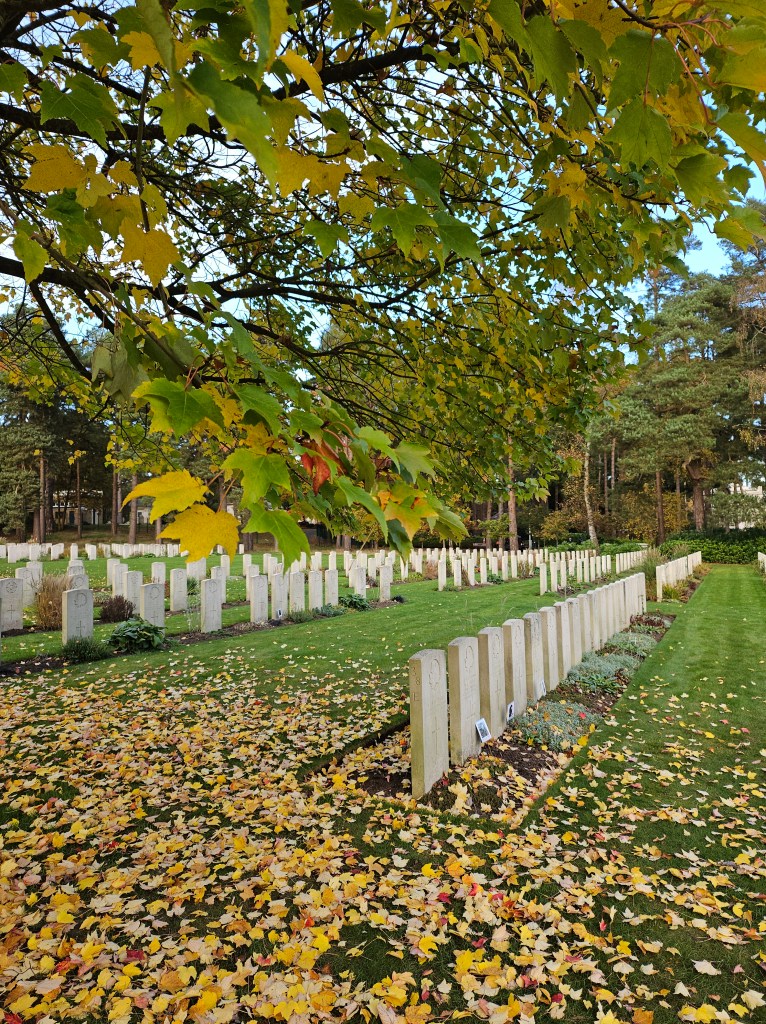
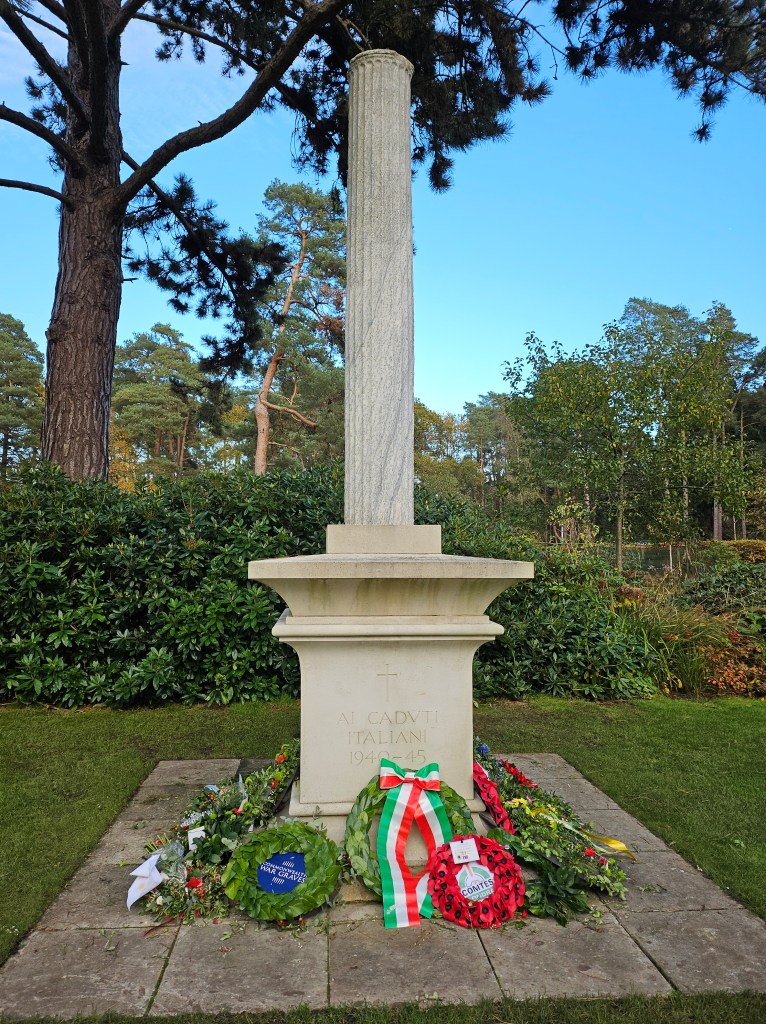
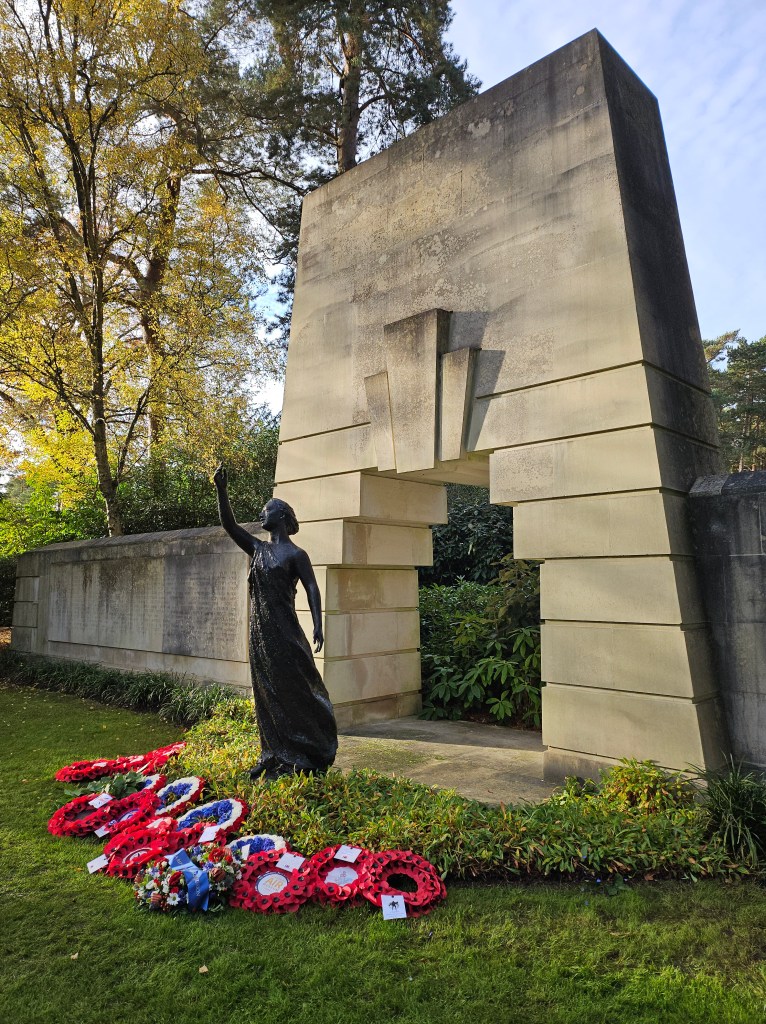
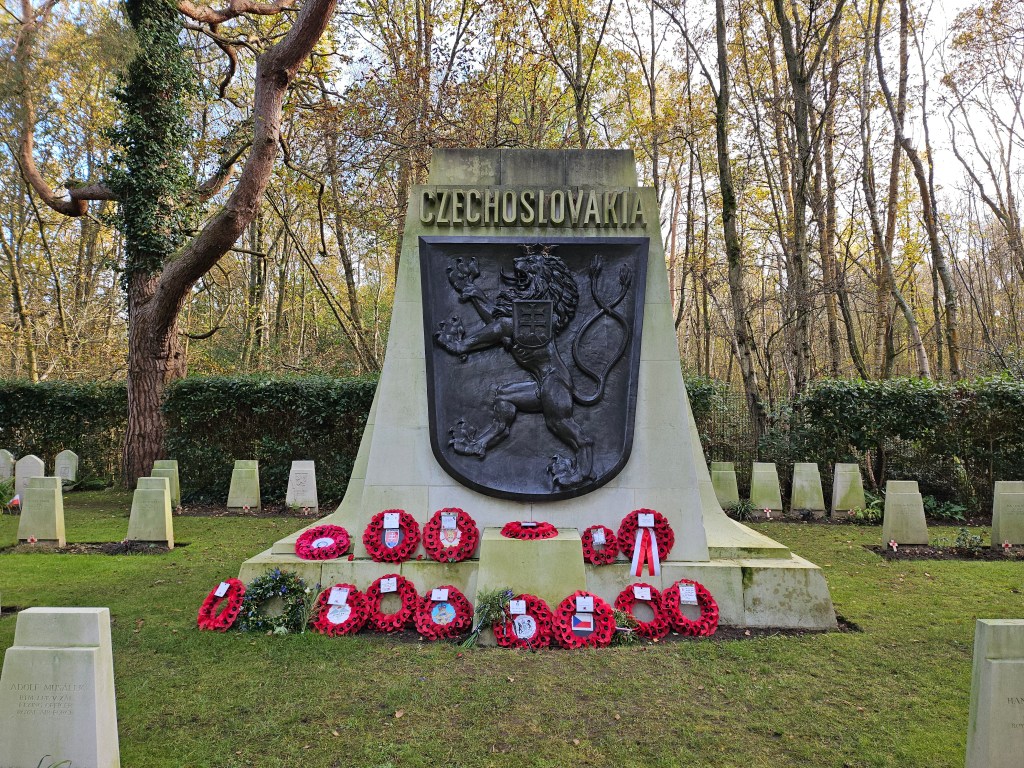
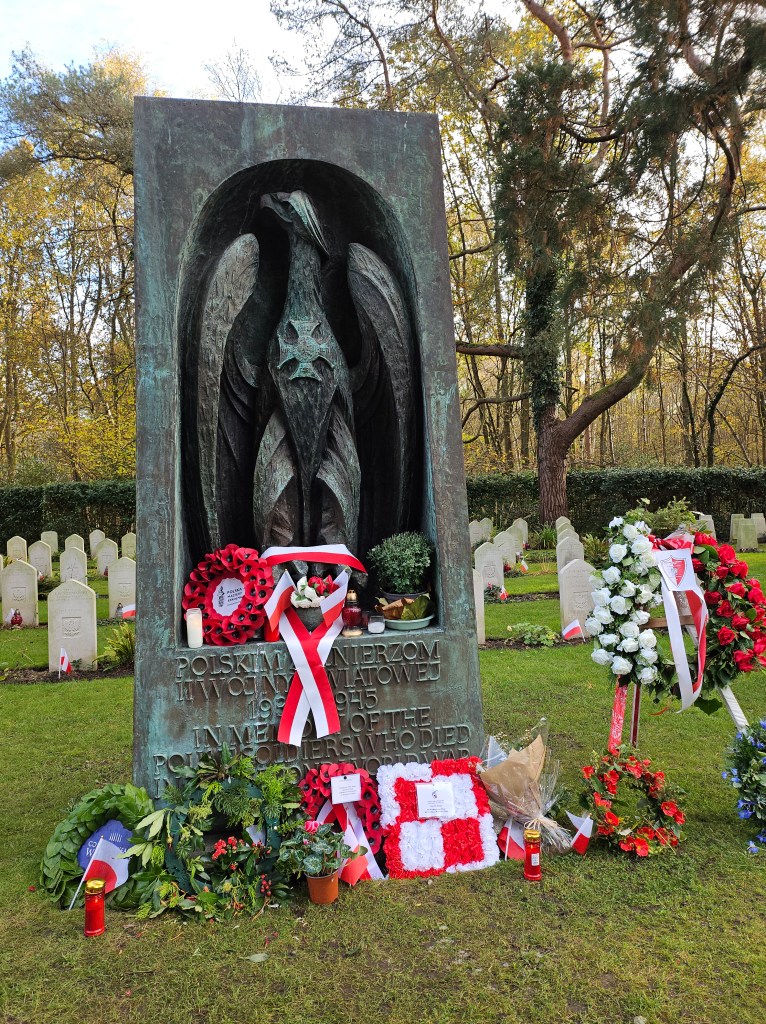
Brookwood is the only resting place for American soldiers of World War I in the UK – there’s a second American cemetery in Cambridge, but that was created for World War II. This makes the Americans some of the oldest residents of the cemetery, as most of the non-Commonwealth dead are World War II-era soldiers. I was struck when I visited by the fact that not only were there other people there, visiting and honoring the dead, but that some of them stopped to pay their respects to the Americans, too. I usually bring stones to put on the graves of Jewish soldiers, and I was pleasantly surprised to see that there was already a stone on the single Jewish soldier’s grave in the American section.
Soldiers who are buried in Britain, including those from the Commonwealth, which had the policy of burying all soldiers where they fell, are largely those who died from their wounds, or before they could ever see combat. A large portion of the American dead at Brookwood died from influenza, but an even larger portion – 562, to the 400 individual burial plots – died at sea from torpedoes and other kinds of attacks before they reached British shores, and they have no final known resting place. They are named in lists on the interior of the chapel, so that even those dead have a place of honor. The message is clear: all service to the nation, no matter how far a soldier got or how he died, is worthy of respect and recognition.
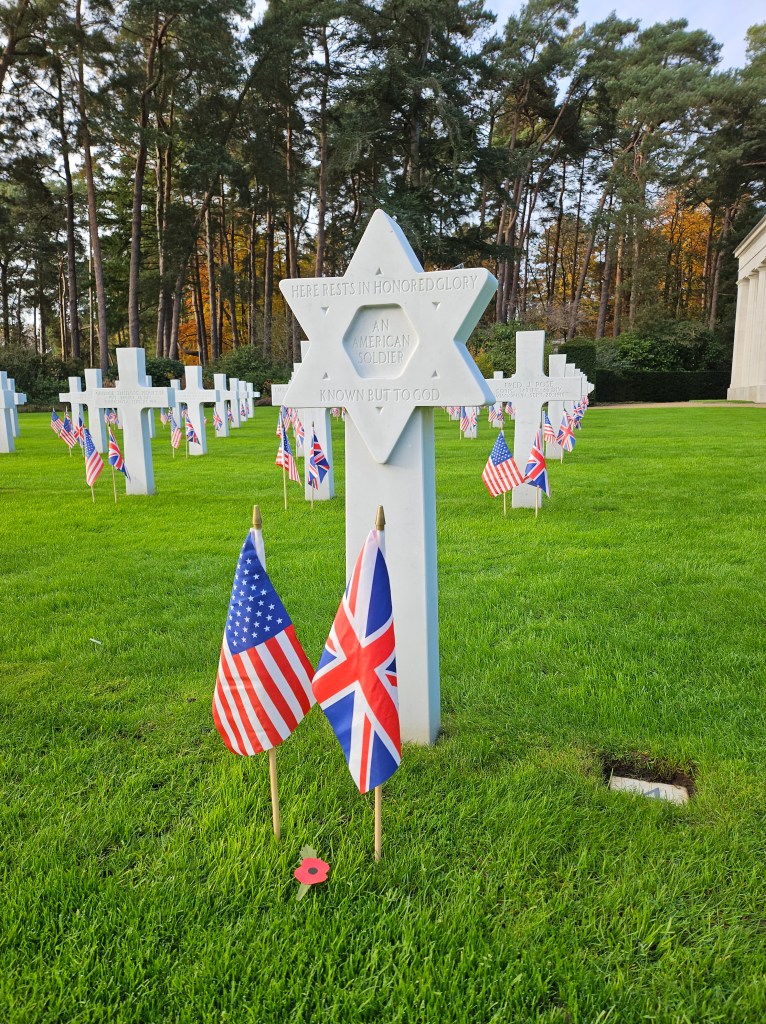
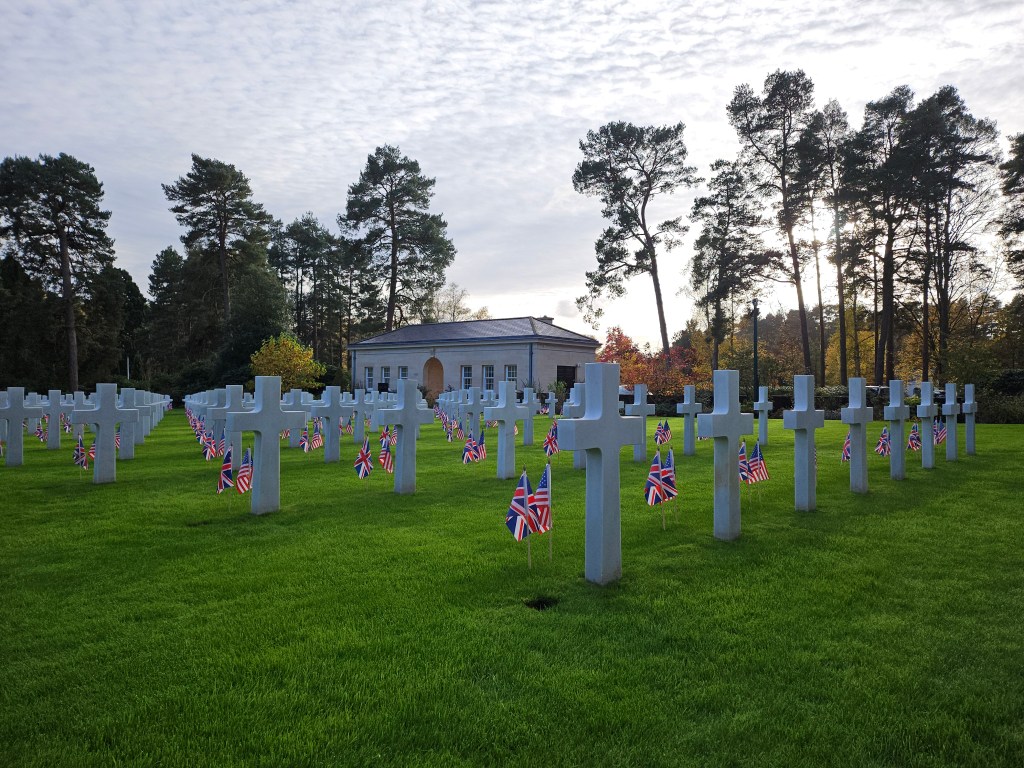
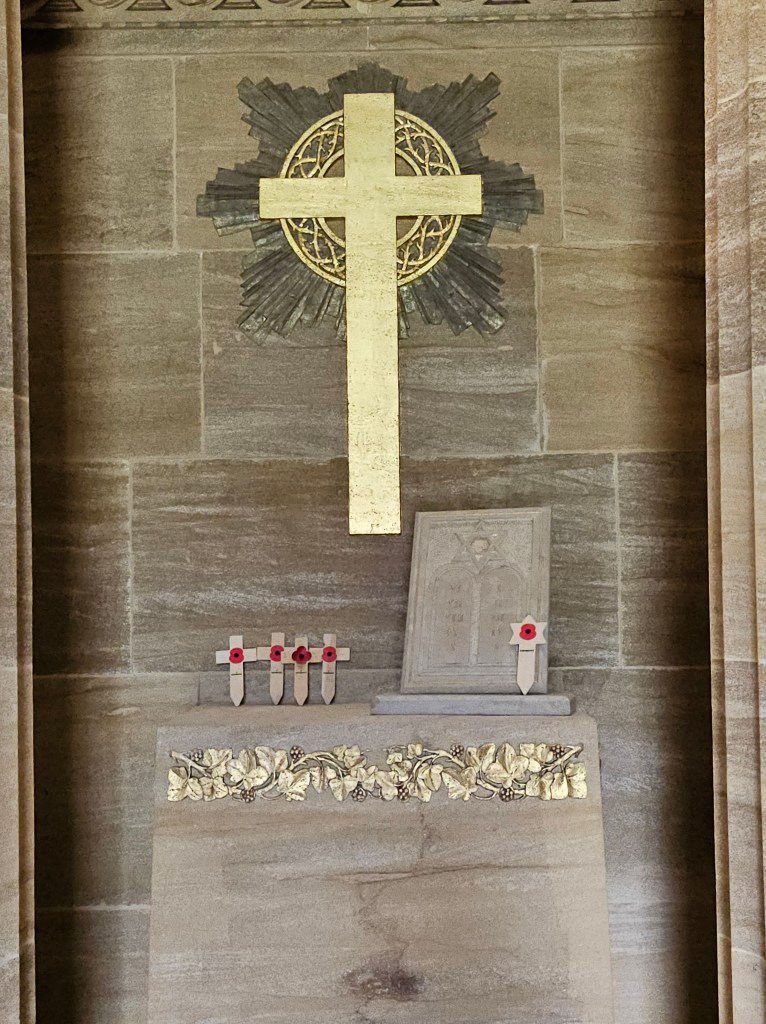
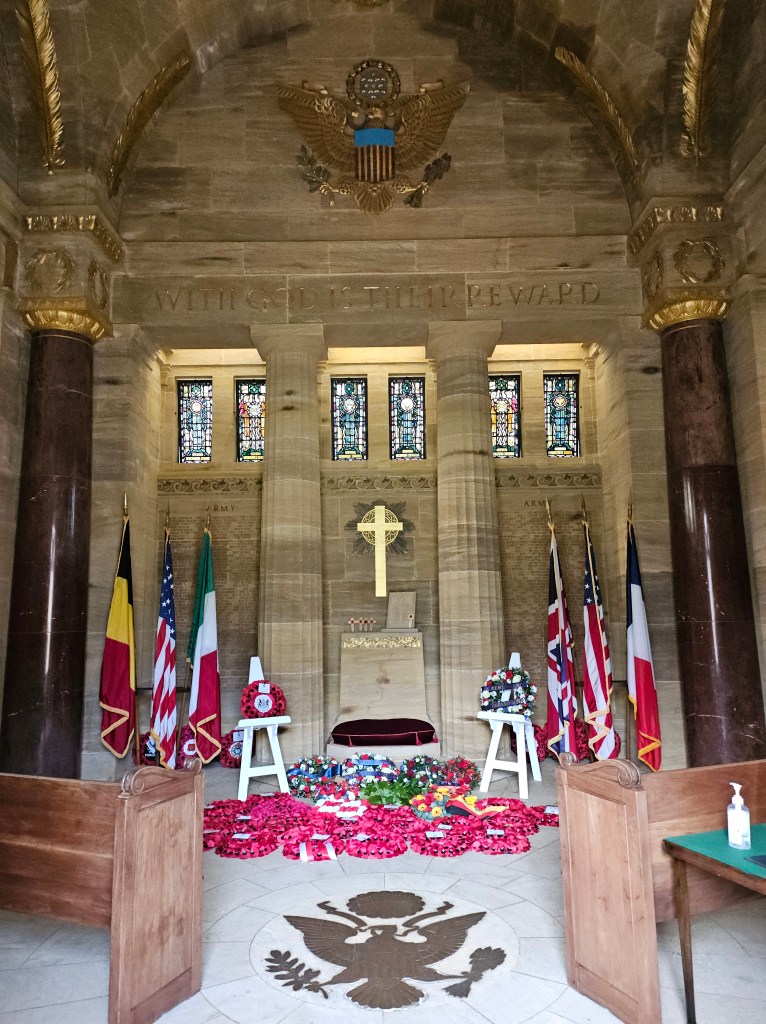
American military cemeteries, and perhaps military cemeteries in general, represent the best ideals of their countries. Although the American Expeditionary Forces were segregated until after World War II, and although women were rarely given the chance to serve until the creation of the Women’s Auxiliary Corps in 1942, American World War I dead were placed neatly in rows without distinction to race, rank, or gender. The only accommodation made recognizes difference in religion: while most soldiers are listed on crosses, Jewish soldiers received a special marker with a Star of David design. Both France and Britian ensured that their colonial Muslim soldiers were not only spared the indignity of crosses, but that they were buried facing the direction of Mecca.
It is easier to give rights to the dead than to the living, and of course we ought to aspire to a country that honors all life equally, whether or not a given individual served. But these moments of decency still matter, and they matter now more than ever. Sometimes honoring the dead brings more honor to the living, and sometimes advocating for rights for veterans has led to an advance in rights for all of us. Yet those who denigrate the dead – including our president-elect, who dismissed the American World War I dead in France’s Aisne-Marne Cemetery as “losers” and “suckers” – cannot be trusted with the living.
I returned to London feeling, if not hopeful, at least comforted by what I had learned—about the simple fact that there is a model out there that does not look exactly like ours, and that operates not without its own problems, but which achieves something that our mattress sales cannot. There is a world outside of America, a world that will be deeply affected by the actions we have just taken, but with its own customs and ideas, and with much to offer us if we are willing to listen. I firmly believe that in order to endure the next four years, we will need to broaden our gazes, remain curious about the world around us – inside and outside of our borders – and learn new things to keep sorrow at bay, probably on a daily basis. So for the next six weeks, I will be looking and learning, and I will try to share as much as what I see and learn here for anyone else who wants to learn with me.
I named this blog from a quote I often turn to from the Lord of the Rings, written by a veteran of one of World War I’s worst battles. I will cite it in full now, lest we forget:
The world is indeed full of peril, and in it there are many dark places. But still there is much that is fair, and though in all lands love is now mingled with grief, it grows perhaps the greater.
 Much That Is Fair
Thanks for sharing this moving and beautifully crafted reflection on your experiences in the UK, Eliana. I find it heartening to learn about these other ways of commemoration: earnest, sober, un-photographed.
I look forward to reading more on your site. Nice name for it, too.
LikeLike