As a graduate student at the University of Minnesota, I was often assigned to lead instructional sessions and teach courses in a small room in the basement of our School of Public Policy, as the History Department had no real classrooms of our own to use for undergraduate instruction. It was an awkward little space – underground, windowless, with glass near the door to provide a visual connection to the hallway outside. A structural pillar created a dead space in the back, and the thirty or so desks crammed inside were often comically undersized for my students, many of whom towered over me when they came up to ask questions at the end of class. It was a great place for hiding from tornados, the ultimate Midwestern natural disaster. It was also catastrophically unsafe in the event of a mass shooting: with one door in and no windows, anyone inside would be a sitting duck. And with the glass paneling next to the door, it would be almost impossible for anyone to hide.
I thought about this problem over and over on my way to and from class, piling up scenarios in my head, reviewing how one might create a barricade and shelter out of sight. I am just old enough that I did not undergo active shooter drills in high school or in college, but the idea seeped into my head over the years anyhow, born from the photos of the elementary students at Sandy Hook and a bomb threat at my high school, and maybe even from my fourth grade teacher, who once told our class that if there was an armed man at the door she would stand in the doorway and block him until we could get out through the windows, but if a mouse came into her classroom, we were on our own. As a child, of course, I paid no attention to the first half of that sentence, focused only on her terror of such a small animal. As a teacher, I have thought endlessly about the choice she had prepared herself to make, the escape route she had envisioned enough that she could toss it out casually in conversation. And I tried to prepare myself, however absurd it felt, so that if the time ever came I could act as quickly and unthinkingly as I knew that she would have. I had to. In this broken world we live in, that is part of what it means to be a teacher.
The classroom I taught in this semester at Brown University was above ground, with windows on two sides and two separate exits. Its problems were instructional ones – mainly, that it had been built in the nineteenth century, and was unsuited to the banal elements of twenty-first century instruction like projectors and fluorescent lighting. When my students and I moved tables this semester, it was to create a small seminar table out of a cavernous space, not to barricade any doors. And somehow, in this new, bustling academic haven, I began to forget. I no longer pondered on my walks to and from the campus how I might hypothetically get my students out in an emergency, though my building is unlocked during working hours, like much of the Brown campus. In Minneapolis I sometimes walked over three different highway bridges just to get to class. But the east side of Providence is a quiet place, where I regularly walk home with my headphones in after dark without fear. A born worrier, I still fretted on my way to and from school. But I forgot myself so far as to fret about mundane things like classroom logistics and seminar dynamics. I worried, in other words, about being a teacher. But I forgot what being a teacher means in this country.
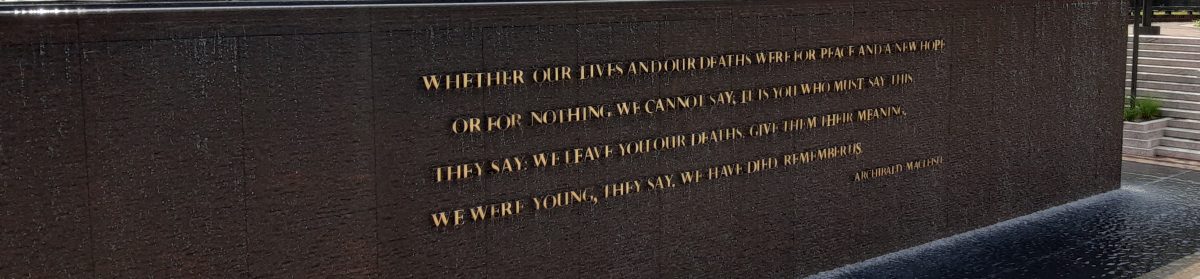
I am a historian of American memorial culture, and the class I taught at Brown this semester was about our monuments, stretching from removal of the statue of King George in Manhattan on July 9, 1776 to the modern memorials built in our century. The most recent of those dealt with the trauma of our last decade – the removal of memorials during the 2020 Black Lives Matter protests, yes, but also the newest commemorative form entering the American lexicon: the mass shooting memorial. Everyone knows what a temporary memorial to the aftermath of a mass shooting looks like, I told my students. We have the ritual down by now – flowers, candles, written tributes. What’s new are the permanent memorials, following in the trail set down by Columbine and Virginia Tech and now taking new and desperately thoughtful, painful forms. In our penultimate week of class, I asked my students to look in particular at the newly opened memorial to the victims of Sandy Hook, an open-air space that tries to offer as many different modes of reflection as it can for all who travel there to seek comfort. We considered its design, its message, and its location – all thoughtful and devastating, all accusations set against a society that has refused to change these past thirteen years. And then we moved on to the next sample site.
I remember that I asked my students, as an afterthought, whether any of them were old enough to remember Sandy Hook. They weren’t. Most of them, instead, were the ages of the children who were killed in the massacre. I said something about how that had marked something irreversible for my generation, the moment that mass shootings became the norm in which they – only a decade behind me, maybe even less – had grown up. I said it, but I said it as an instructor, a reference point to help them understand the context of what we were looking at. I said it, and they nodded, and we moved on. Last week we finished out the class with their own memorial projects, serious and creative and full of possibility. I posted their final grades and I sent them a note to wish them all well. I am always sad when a class ends, because it means the end of the relationship the class has built together, but I was pleased, too. They had all done an excellent job. And, after all, part of being a teacher is saying goodbye to your students.
We read about mass shootings so often these days that there is something about the actual event that feels oddly rehearsed. I was at home on Saturday, and my phone was off, as it usually is, because it was Shabbat. The first clue I had that something was wrong was when I switched it on shortly after five and saw I had two voicemails, both from the Rhode Island 401 area code. My body reacted before my brain did when I heard the words mass shooter. Even as I scrambled to turn on my laptop, even as I started to type out a note to my parents, I reached up to touch my cheek and realized I was crying.
I moved through the motions on a sickening sort of autopilot: I shut off my lights and moved away from the windows, I pulled up as many news sites as I could think of, and I turned my phone’s sound on, both so that I could get the emergency alerts as fast as possible, and so that I could respond to the messages I knew would pour in as soon as the news hit national headlines. In that first hour, the emergency alerts came so frequently that my email started sending them to spam. In the second hour, the messages from what seemed like everyone I had ever known began to outnumber any information from the University. I responded as each one came in, knowing that the person on the other end might be wondering whether I was alive. “I’m okay,” I wrote in the first few hours, but as the reality began to sink in, I realized I was not okay at all. “I’m safe,” I substituted. “Sheltering in place.” “Waiting for news.”
Five, nearly six, days later, much of that news has not yet come. We know nothing of the shooter, nothing of his identity or his motive or even his whereabouts. Worse, I do not know if my students are unharmed, if they are home, if they are safe. Until Monday, I did not know whether any of them were dead. And I could feel only the smallest, barest relief when I learned that their names were not on that latter list, knowing that other faculty members had been hoping and praying just as I had that their students were safe – only to read the headlines and learn that they were not. I didn’t even get to take a class on pedagogy in graduate school. Who can teach an instructor how to send their students an email begging them to be alive?
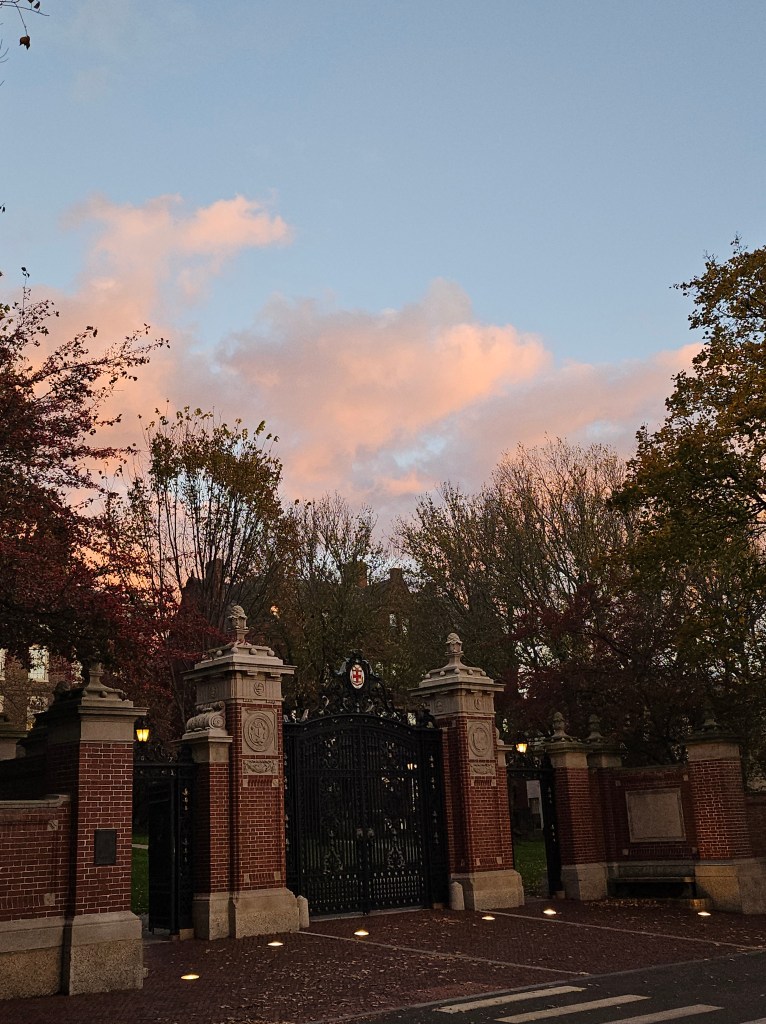
Nevertheless, I sent my class a short note on Sunday morning, to offer assistance and an update on how their grades would work this semester and, I will admit, to fish for information on their wellbeing. One responded, alive and headed home, and I felt dizzy with relief. From the others there was no word. Two days later, when Brown President Christina Paxton officially confirmed the deaths of Ella Cook and MukhammadAziz Umurzokov, she noted that many members of the Brown community were already offering up ideas about how to memorialize them. I watched the flowers and the candles and tributes pile up in front of the Barus & Holley Engineering Building and the Van Wickle Gates and wondered if my students read these gestures as part of the wider patterns we had discussed in class. I wondered if I wanted them to. In spite of myself, some small part of me was processing this horrific week as a scholar and as a researcher, folding it into the long history of mass shootings in this country and the rituals of mourning that play out in their aftermath. I could not wish that critical distance for my students, because I can hardly handle it myself.
How dense is the web of threads that connects us to this world. In the past five days I have heard from teachers and students, family and friends, coworkers and godparents and even my dentist. I heard from my new friends at Brown and in the wider Providence community, from my old friends, teachers, and students at Minnesota, from family who have known me my whole life and from friends I have only met in person a handful of times. My next-door neighbor brought me cookies. More people than I can count have offered a listening ear, a meal delivery, and quiet but certain support. And amid the shock of an ongoing manhunt, Brown’s students have organized for their own, and Providence has mobilized to support them. But for two Brown students, those dense webs were activated on Saturday night only to reveal a gaping hole in the center. How many teachers had mentored them throughout the years? How many of them tried to write their students a note that night, begging them to be alive?
One can be a student of the world without a particular teacher, but one cannot be a teacher without students. The campus feels as empty now as it did during the summer, when I first moved here and thought the grand Ivy League quad looked more like a movie set than a place of academic instruction. With the return of the students for the four months of the fall semester, it became a home for both me and my students. Without them, Brown’s heart departs. And without them, mine does too. We are always meant to say goodbye to our students. But not like this.
For ways to support the students at Brown, please see the bottom of this resource page set up by Brown undergraduates.
 Much That Is Fair