I spent my last weekend in the UK in London with a friend who had flown over from the States, mostly so that she could see the revival of Guys & Dolls playing on the West End before it closes next month. Upon meeting Kings Cross Station, she remarked to me that she always forgets until she arrives in the UK how different its culture is from America’s, a culture shock epitomized this time by a broken-down escalator on the Elizabeth Line. An attendant had been standing by it, explaining that it was broken, apologizing for the inconvenience, and directing passengers to the working escalator. My friend lives in New York City, where the very idea of doing this would probably get you laughed out onto the street. “There was even still a working escalator next to him,” she said, in tones of wonderment.
Like most 90’s children, my friend loves Guys & Dolls in part because it is a classic and wonderful musical, and in part because it was one of the few records she owned growing up and so she listened to it constantly. (My own version of this was Wicked). It was a pretty funny joke that she’d come all the way to London to see New York City recreated on stage, but there was a certain charm to it, too: the set had faithfully reproduced the newspaper boxes, the chaos of the streets, the rattling sound of the subway, even the manhole covers. I was reminded of many years ago, when I was leaving London to travel back to New York City after a week’s vacation and feeling very sorry for myself, and suddenly heard a busker wistfully working his way through Simon & Garfunkel’s “The Boxer” at Tottenham Court Road. I consoled myself then that at least I was leaving London for another global city people dream of getting to. This production had a little of the same feeling to it: somewhere in the audience was someone who had never seen New York, but who might want to visit after seeing the city’s timelessness portrayed in Guys & Dolls, with all its heckling and gleeful embrace of sin in one breath and genuine decency in the next, so different from London’s dignified and restrained outlook on life.
I joked at the start of this trip that I was fleeing the country after the election, but of course throughout my travels, as I have looked and learned about all of these other places, I have been thinking about my own country, too. Seeing America through the lenses of these stories and noticing the connections that tie this world to my own is an essential part of travel, and it is all the more necessary now. Guys & Dolls offers a version of New York that anyone across the world can fall in love with, where everyone from the rapscallions to the missionaries is worth our affection for at least a little while. We will need those memories and stories of our country, true or not, in the years to come. Otherwise, we will have no real sense of what we are fighting to build and to preserve.
We did a few of the more touristy things around town, ranging from last-minute holiday shopping to a frankly forgettable afternoon tea with an unforgettable view of the Houses of Parliament in the background. But, in deference to the cancelled leg of my travels, we also planned on last day trip: to Cardiff, Wales, the one section of the UK that I had completely missed on this trip.


Cardiff, gateway to Wales and now its capital city, is a tangled space. It is an old city but a historically small one (and even “old” is relative: while Cardiff’s history dates back to the Romans, we might remember the prehistoric settlements at Dartmoor or in the Orkney Islands), and it only became Wales’s capital in 1955. Like Leeds and Manchester, the city boomed during the Industrial Revolution, as Wales was plundered for its coal and its population sent into the mines. It was sort of an underdog for the capital city, as many Welsh politicians considered it too English for such an important status. The city responded by bidding to host various national institutions, all of which succeeded except for the Welsh National Library, when it was once more passed over for being insufficiently Welsh.
Nowadays, Welshness is front and center on the governmental levels, including the municipal. Disembarking from the train, we noticed that all signs and announcements were given first in Welsh and then in English, a marked contrast to the Scottish Highlands, where signs were sometimes given in Gaelic but only ever after the English announcement. The pattern held for the street signs, informational placards, and travel directions – but stopped there, because all the shops and any other private ventures had signs only in English. Approximately 13% of the Welsh population are fluent or near-fluent Welsh speakers, according to a 2021 assessment, and the densest concentrations are in western Wales. The Welsh signs offered a powerful reminder of the time when nearly one hundred percent of residents spoke Welsh as their first language, but I also wondered if they represented a continued attempt to shore up Cardiff’s status as a real Welsh city, worthy of being the capital.
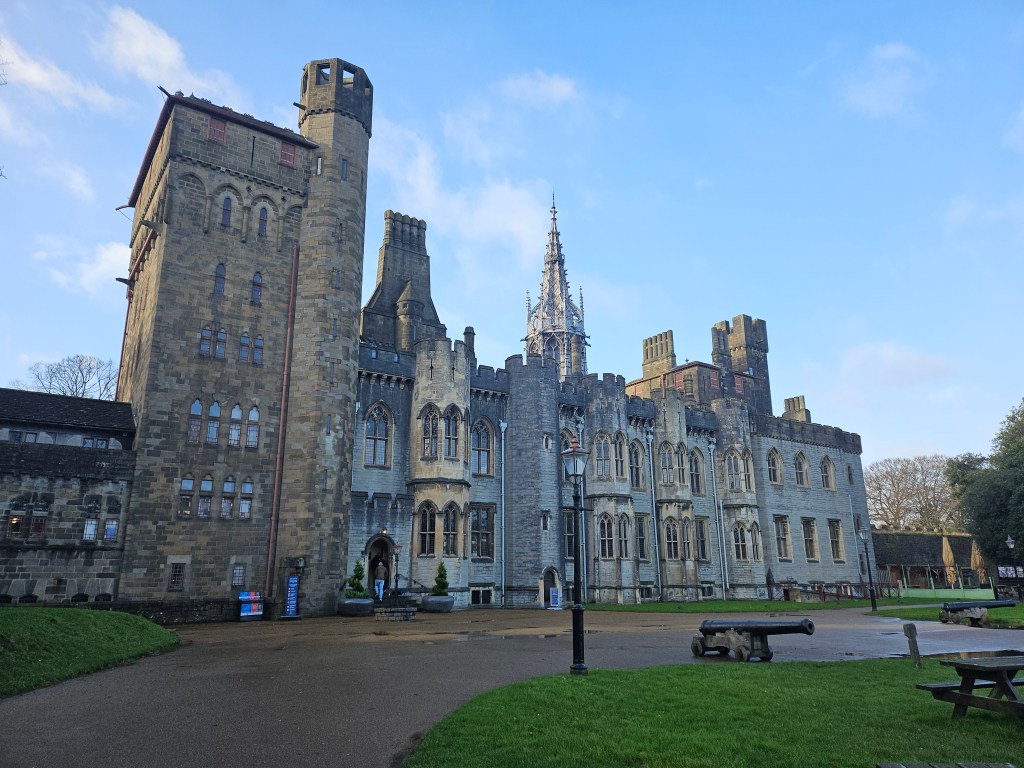
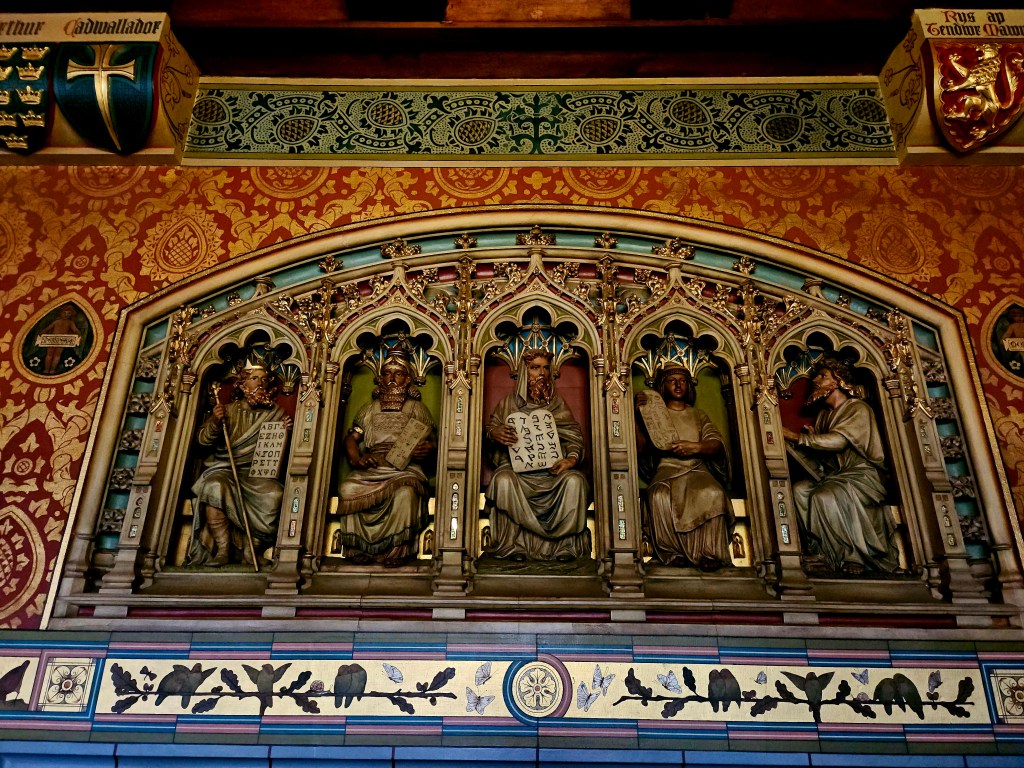
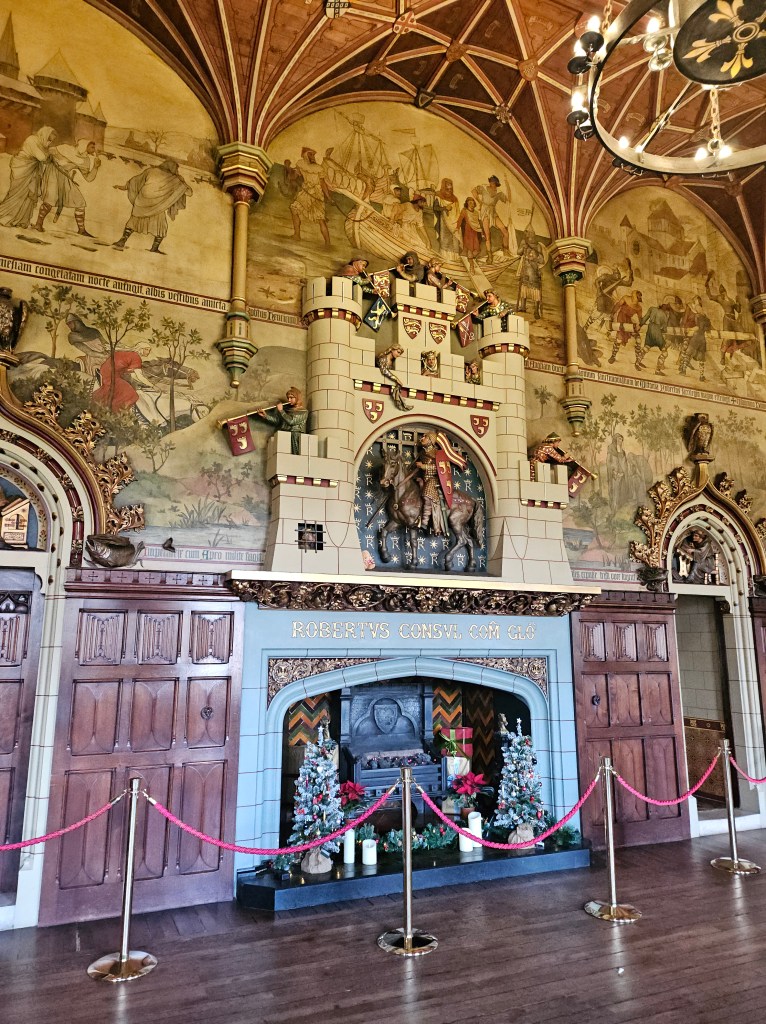
The Sunday before Christmas is never a good time to visit a museum, so we stuck to the outdoor spaces in and around the city, which are reasonably few and can be managed in a day. Cardiff Castle, which began as a Roman Fort and has been continually modified so that now it mostly looks like what its nineteenth and twentieth century occupants thought a medieval castle should look like, is in the center of the downtown area. In all the castles I’d seen, I’d favored ruins, so this was a nice introduction to a place with furnishings and also modern heating, but it did not tell the story that some of the other castles I had visited did, and the most remarkable thing about it was the weather. It rained through sunshine most of our visit, and a trip to the top of the guard tower afforded us a perfect view of a full rainbow, which seemed like such a common occurrence that hardly anyone paid it any attention at all.


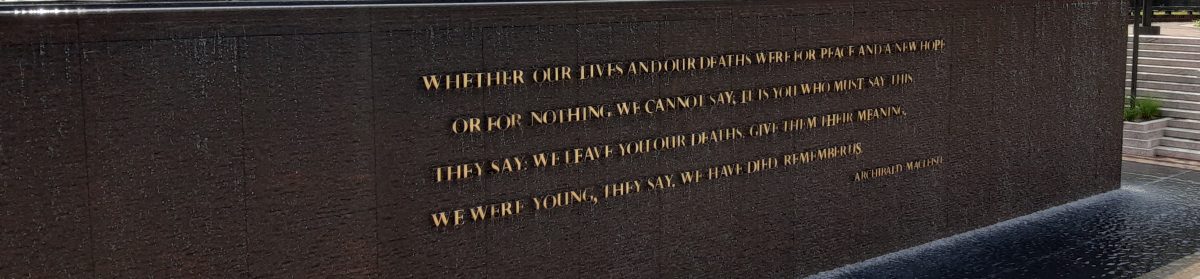
Like Leeds, Cardiff was built up in the time that everyone was really obsessed with arcades, so we wandered through a few and enjoyed the more modern architecture as well. I of course had to track down the Welsh National War Memorial, which was a totally different kind of thing than either London’s wordless Cenotaph or the Scottish National War Memorial up in Edinburgh Castle. It was a simple outdoor sculpture surrounded by a colonnade, and situated in a park that had grown to hold a number of other war memorials in the following years. It is perfectly respectable, but it did not emanate the same sense of national grief that I had seen in England and in Scotland, and once again I wondered how properly representative Cardiff really was of the rest of Wales, despite its national symbols. But then again, maybe there was another reason. My host back in London at the start of this trip was part Welsh, and his grandfather had served in World War I as well as the Boer War before it. He joined the army voluntarily, my host told me, because the only alternative for him was the mines.
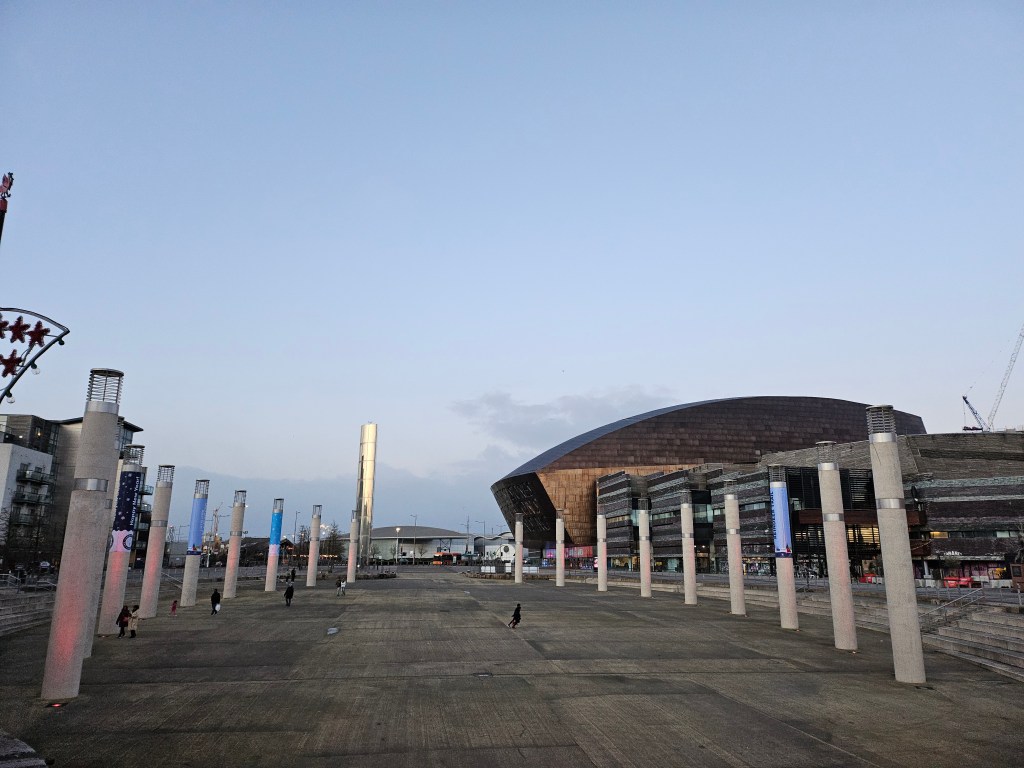
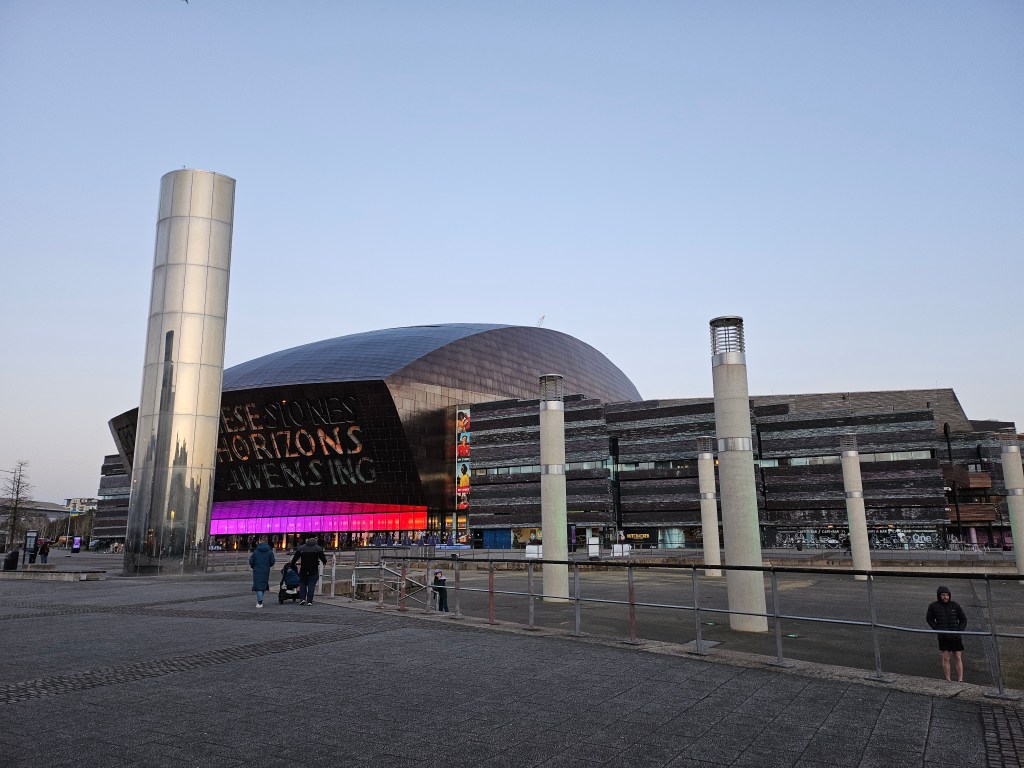
We wandered down to Cardiff Bay, famous these days for its repeat appearances in Doctor Who, and then returned to the train station, sorry perhaps that we could not have seen more of Wales, but not necessarily wishing for more time in Cardiff specifically. While we waited for the train, a young man sat down at their open piano and began to play a medley of the showtunes from La La Land, of all things, another reminder of the reach of cultures across oceans.

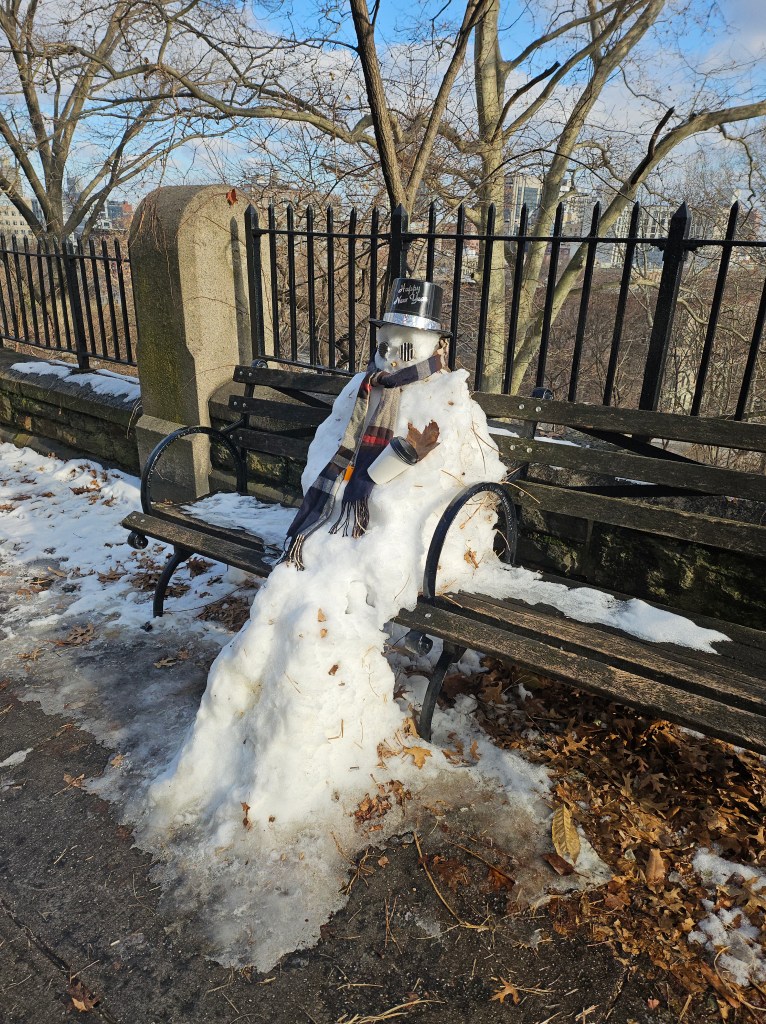
I returned home with my friend to New York, which is probably as close to a home as I have anywhere now, more so than Chicago has been for some time and more than Minneapolis, my supposed home for the last four years, ever was. I am often here over the holiday season; this year, I have the additional joy of being here to celebrate a student’s bat mitzvah, tutoring being one of the many extra gigs I have picked up to support myself on a graduate salary. A few days later, I was on a 1 train up to the Bronx, where my student lives, when I got my real welcome back to the States: a man entered our subway car and proceeded to pretend to shoot at all of us, sounds and everything, with a gun he made from his fingers.
In and of itself this was not a terribly unusual situation in New York. I did the usual check (as if this has somehow become normal in America!) to make sure that he did not have a real gun, and then I went back to my book. But what had changed was the angry, shaken tone of one of the other passengers in my car after the man had finally gotten off the train. “That’s why Daniel Penny did what he did!” he said angrily, citing the man who was recently acquitted for killing Jordan Neeley, an unhoused New Yorker who had allegedly entered a subway car and threatened passengers last year. “That’s why he did it,” the man repeated.
He and the passenger across from him got into a conversation from there about the hiked subway fares (this January, a ride on the New York City subway will cost $3.00) and the services that did not seem to improve no matter how much money the MTA charges. The issue was exemplified by our own train, which moments later announced that it would terminate at 215th St. instead of 242nd for no apparent reason and asked passengers to stand out on one of the elevated platforms on a freezing New York morning while we waited for another train to take us the same route that this train was supposed to be taking. Ruefully, the woman next to me joked that it should at least be as far as 225th Street, a more useful connection point, and suggested we all stay on the train in protest. But when the time came, we all got dutifully got up and off the train (a key to understanding New Yorkers, I think, is that their bark is almost always worse than their bite), with the same woman translating the announcement into Spanish for several passengers who had not understood the original instructions and yelling at the conductor for not giving instructions in Spanish herself. The train stalled; we shivered and waited on the platform for it to pull away. And then, exasperated, the train conductor shouted, “Alright!” and opened the doors again. Maybe the heckling had won her over, or maybe she’d been told she could take us to 242nd Street after all. “The power of protest,” the same woman said drily, and we clattered on our way uptown.
I thought again of London and my friend on the Elizabeth Line, and the staff there to explain to what was broken and why, and what you could do instead. What I heard in the Bronx was not fury with fellow passengers, not even our would-be shooter. It was frustration with a system that seems unable to change, and that will not explain why problems are happening and what you can do instead. It was anger that there was no system in place to help Jordan Neeley and those like him, and fear that responsibility for them would fall on ordinary citizens instead of trained professional therapists and social workers. It was a deep desire for connection, made evident in the pressure valve that released as soon as everyone had something to agree to complain about, and something, anything to do, even if that thing was as simple as passing along information in a language that should have been offered by the city instead. I thought too of Wales, so committed to prioritizing Welsh even when the majority of its people speak English in order to claim its history, and wondered what it would look like for us to finally allow Spanish even a secondary ranking alongside English in places like the subway instead of just letting everyday New Yorkers feel confused and unwelcome.
Those voices were perhaps some of the Americans who turned to Trump this election season, people who are frustrated with a system that does not work and that cannot even begin to explain why it is not working. I do not think he will give us the answer, but we cannot blame them for wanting a different solution. My host in London at the start of this trip was an avid Trump fan (though of course, as a Brit, he could not vote). Trump will break down the system to build something better, my host told me, unwilling to consider all the ways that the former president had benefitted so well from this broken system the last time he was in office, and all the people who were hurt in the process. But he did not speak from malice or hatred. When he told me later about his grandfather, the impoverished young man from Wales who had joined the army and gone off to two wars rather than live a life in the mines, tears came to his eyes.
This complicated web of emotions and identities is our legacy as human beings, irrespective of our nationalities. But still, despite all the fretting I hear about getting out of the U.S. while there’s still time, I am not ready to leave just yet.
I always go to the same synagogue for services on the Shabbat before New Year’s Day, mostly because the clergy there always sing the closing prayer that week to the tune of Auld Lang Syne (a tune first written down by Edinburgh’s beloved Robert Burns), a charming mix of Jewish, immigrant, and American customs rolled into one. This week, services came with an extra surprise. The weekly Haftarah, a supplementary reading from the books of the prophets that follows the Torah reading, is from the book of Zachariah during Hanukkah. Usually, the Haftarah reader also does the final blessing over the Torah reading, when they are called to the Torah by their Hebrew name. I thought that the reader this week looked familiar, but since I only knew his name in English, I couldn’t be sure until the cantor introduced him formally before the reading. It was Congressman Jerry Nadler.
It’s not uncommon for Jewish politicians to crawl out of the woodwork around the High Holidays, which is how I have met a not-insignificant number of them over the years in the pews, looking a little unsure about what to do but committed to being there nonetheless. If a congregation honors them, they usually do so by giving them something manageable: reading a prayer for the American government in English, maybe, or the short blessing over the Torah that you can always read without a melody if you forget how the tune goes. In exchange, the politicans get the warm praise of the congregation for deigning to show up. Reading the Haftarah, on the other hand, is a highly specialized skill, the kind of thing that I begin teaching my bar and bat mitzvah students months before their ceremony and can take years to perfect. But Representative Nadler attended a yeshiva for his high school education, and he read like a regular member of the congregation: carefully, fluently, with the emphasis in all the right places. When he finished, he made to leave the bima at the front of the synagogue without fuss, and had to be called back by the cantor and the rabbi in order to receive a special blessing for the work he does in Congress.
I had the sense that Nadler understood what many other politicians don’t get about the synagogue: here is a space where we are all equal before whatever higher power we believe in, and we are not there to make a fuss about ourselves, but rather to contribute to the community. Reading Haftarah may be a demonstration of a complex skill, but Jewish tradition teaches us to see it first and foremost as an honor: a service that we can provide for our community, not a way to show off. He left without fuss just after the service had ended, and when I ran into him in the foyer, I only wished him yasher koach (non-literally translated to mean something like ‘nice job’) and shabbat shalom as he set on his way. The weight on his shoulders must be a great one. Perhaps he goes to shul for the same reason the rest of us do: to take a break from the bustle of the world, and to center himself before the next battle.
As I listened to him read Zachariah’s immortal lines, I thought about the country that had sent a yeshiva kid from Brooklyn to the halls of power in Washington and offered paths like his to so many other Americans from so many different backgrounds. That is the country I wish to protect, and it is our legacy, if we are brave enough in the coming years to keep it. Perhaps Nadler thought of this too, as he reached the most famous phrase of all:
Lo vechayil v’lo vechoach, ki im beruchi – amar HaShem tzevaot.
Not by might, and not by power, but by My spirit – says the Lord of Hosts.
We will need our spirit in the coming years to stand against the false gods of might and power. We will need our stories and our myths, our own wisdom and that from other shores, a firm sense of our own history and what we can learn from others. We will need our allies and our friends, but we will also need to build these new bridges: with our fellow Americans, and with the world beyond our borders. Sometimes that work will involve stepping back, going to see other places, listening to new voices, and reminding ourselves that things can be different. And sometimes it will require that we set aside our own egos and step up to offer our skill to our community, without promise of reward or recognition. It will not be upon us to finish this work, as the rabbis of the Mishnah once famously taught us. But we will not be free to desist from it.
 Much That Is Fair
Very well done once again! Thank you so much for sharing your travels to places of I have dreamed of going to. Your words and photos have truly carried me along with you on your journey. Thank you too for your perspective on this country of ours, it has definitely pushed me towards thinking for positively towards the future. So as this part of your story ends, thank you for leaving with me the gift of “hope”.
LikeLike